
Verse of Today: Acts 2:23

My site is for uplifting and encouraging those that need spiritual advice and guidance.

I have the courage to create positive change in my life.

 www.bible.com/en/reading-plans/13525
You can enjoy this 12-Day Bible reading plan when you download the You Version Bible App. Let the joy and love of Jesus spring up in your hearts that others may see His love in you. God bless, and Merry Christmas.🎁🎄

Love this❤ Shared from Bible Verses: Daily Devotional app – https://bibleverses.app
#bible #bibleverse #bibleverses #bibleversesdaily #bibleverseoftheday #biblequotes #biblequote

I got my own back.
-Maya AngelouFrom the Motivation app: https://motivation.app/download
Write what you feel and share it with the world.
Click on the link to watch this spirit filled video. I pray you are inspired by the words of this song. God bless, and Merry Christmas 🎁🎄

Download the Olive Tree App to
get these great deals on these amazing resources.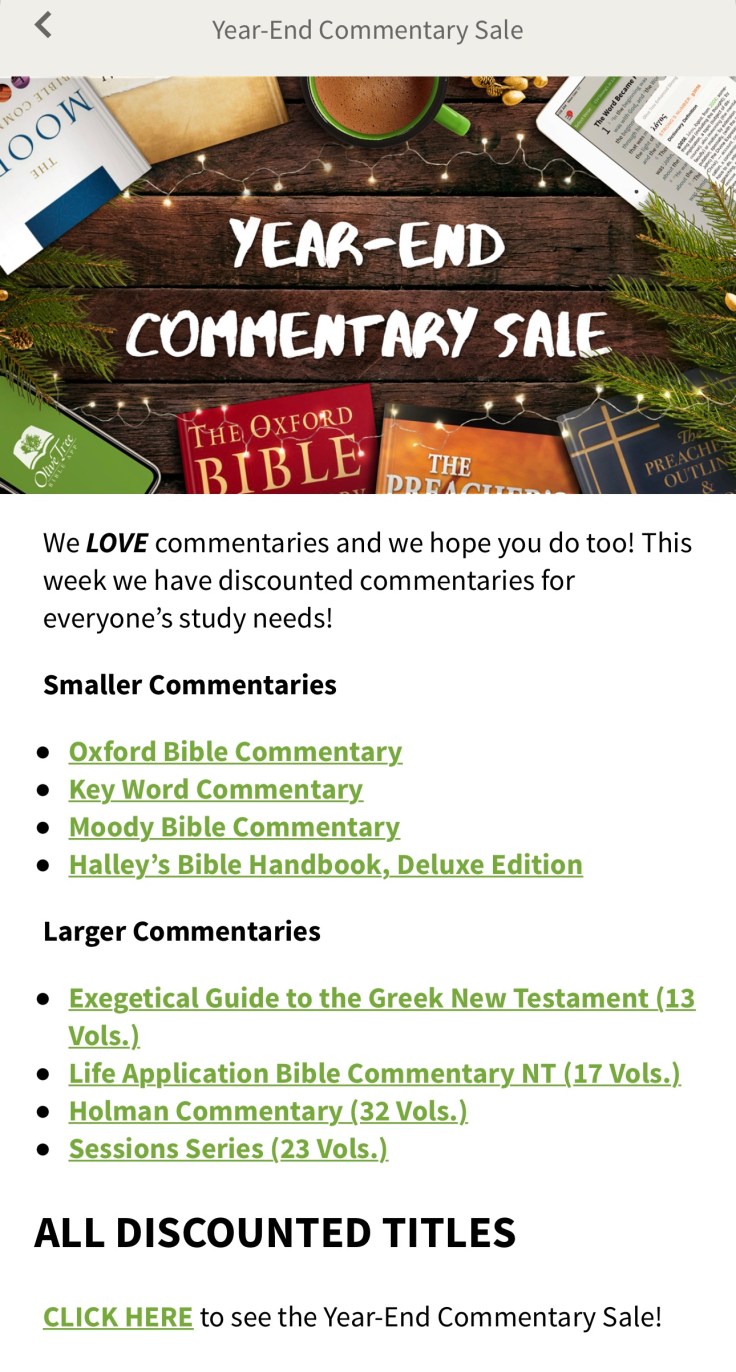
Maybe you’ve heard 2 Chronicles 7:14 before. The concept of “repenting” can feel vague, but the Bible has this verse to take out some of the guesswork. Of course, we can’t just take a verse out of context, but the principles outlined are transferrable after some care. To aid our studies, let’s see what the Moody Bible Commentary has to say.
“If my people who are called by my name humble themselves, and pray and seek my face and turn from their wicked ways, then I will hear from heaven and will forgive their sin and heal their land.” – 2 Chronicles 7:14
Repentance During Trials
This awesome promise placed a compelling responsibility on the nation. The Lord anticipated a time of trial, one that would have been real to any nation in that time and place—a period of drought, pestilence, and famine (7:13). There is no indication that this eventuality was necessarily the result of sin—it might have been so, or it may simply have been an experience under God’s providential direction. In any case, the promise meant that the nation had recourse to alleviate such disasters.
In what is perhaps the best-known verse in all of Chronicles, the Lord outlined the proper attitudes and actions to regain and enjoy the blessing of the Lord. Although the promise was specifically directed to My people, the principles are applicable to all who call upon the name of the Lord (cf. Jl 2:32; Zph 3:9; Ac 2:21; Rm 10:13; 1Co 1:2).
The Facets of Repentance
The four actions listed in 2Ch 7:14 were not intended to be understood as “steps in a process” but as contemporaneous “facets of an active attitude given tangible expression”. These acts would be illustrated by several of the exemplary Davidic kings in the narrative to follow in 2 Chronicles, giving proof to the truth of this promise.
A repentant people are to:
Humble themselves, that is they must refuse the stubbornness and pride so ever-present in the nation’s history.
Pray and afford themselves of the great privilege represented by the temple itself.
Seek My face, again one of the key themes of the Chronicler; seeking God’s face means the people are to reject self-seeking and self-reliance.
Turn from their wicked ways—this is repentance.
These acts indicate that the Lord expects nothing less than a deeply felt rejection of self-reliance, self-trust, self-seeking, and a conscientious dependence upon Him, an active submission to Him, and a determined and active alteration of lives to be lived for Him.The Lord’s promise in response to this “active attitude” was threefold:
He again promised to hear from heaven—an overwhelming reality if understood
To forgive their sin—the necessary step to restoration of the relationship with Him and the enjoyment of His covenant blessings
To heal their land. This last element not only recalled the tangible aspect of the Abrahamic promise—the land—but also would have been especially encouraging to the Chronicler’s generation as they were struggling in that very land—one badly in need of restoration.
Whose Land Gets Healed?These promises were addressed to His covenant people Israel and reflect the Deuteronomic blessings and cursings promised in the law (cf. Dt 27, 28) and are therefore not appropriately enjoined for believers who do not live in a theocratic nation. Certainly God would long for the people of the United States (or any other country) to humble themselves and pray, and turn in faith to Jesus the Messiah. Although God would certainly forgive the sins of those people who turned to Him, there is no promise here that God would restore their respective nations or heal their lands.
Insight for Your Favorite Verses
Whether you’re a Bible scholar or a newcomer to the Faith, the Moody Bible Commentary is a compact and helpful tool for your study of the Word. Discover the depth of the Bible with commentary from the world-renowned Moody Bible Institute.
Moody Bible Commentary
To read these blog posts on Gratefulness, click on the link above. You can also download the app for free to experience all that it has to offer. Merry Christmas 🎁🎄.
Atheist vs. Agnostic: What’s The Difference?
Published August 15, 2022In the context of religious and spiritual belief—or non-belief—there are two terms that often cause confusion: atheist and agnostic. But these terms do not mean the same thing. Read on to learn the distinction.
agnostic vs. atheist
There is a key distinction between these terms. An atheist doesn’t believe in the existence of a god or divine being. The word atheist originates with the Greek atheos, which is built from the roots a- (“without”) and theos (“a god”). Atheism is the doctrine or belief that there is no god.In contrast, the word agnostic refers to a person who neither believes nor disbelieves in a god or religious doctrine. Agnostics assert that it’s impossible to know how the universe was created and whether or not divine beings exist.
The word agnostic was coined by biologist T.H. Huxley and comes from the Greek ágnōstos, which means “unknown or unknowable.” The doctrine is known as agnosticism.
Both atheist and agnostic can also be used as adjectives. The adjective atheistic is also used. And the word agnostic can also be used in a more general way outside the context of religion to describe stances that do not adhere to either side of an opinion, argument, etc.
theist vs. deist
To complicate matters, atheists and agnostics are often confused with theists and deists. A theist is the opposite of an atheist. Theists believe in the existence of a god or gods.The word deist refers to someone who believes in God. But a deist believes that while God created the universe, natural laws determine how the universe plays out.
Deists are often connected to Isaac Newton’s clockwork universe theory, which compares the universe to a clock that has been wound up and set in motion by God but is governed by the laws of science.
Religious or not, you likely say goodbye on a daily basis. But were you aware of the word’s holy history?
Go Behind The Words!
Get the fascinating stories of your favorite words in your inbox.
WORD OF THE DAY
momentous
[ moh-men-tuhs ]
SEE DEFINITION & EXAMPLES
DEC 13, 2022
REDEFINE YOUR INBOX WITH DICTIONARY.COM!Home / Word Facts / Mixed-up Meanings / Atheist vs. Agnostic: What’s The Difference?
SIGN UP FOR WRITING INSPIRATION IN YOUR EMAIL
About
Careers
Contact Us
Cookies, Terms, & Privacy
Since I have been a Christian, and before I became a Christian, I have heard of both of these words in conversations but I didn’t know what they meant. So, here is what I found out about it just looking on line. I thought I would share it just in case there are some who may not know what those words mean. God bless, and Merry Christmas 🎁🎄.

 bible.com/bible/1/dan.12.3.KJV














 Food for the Soul