God is so good to me! What more can I say? He has changed my life for the better. My future is bright. I feel like I am already living in the future. I am living my dream all because of Jesus. I owe it all to Him! Amen!








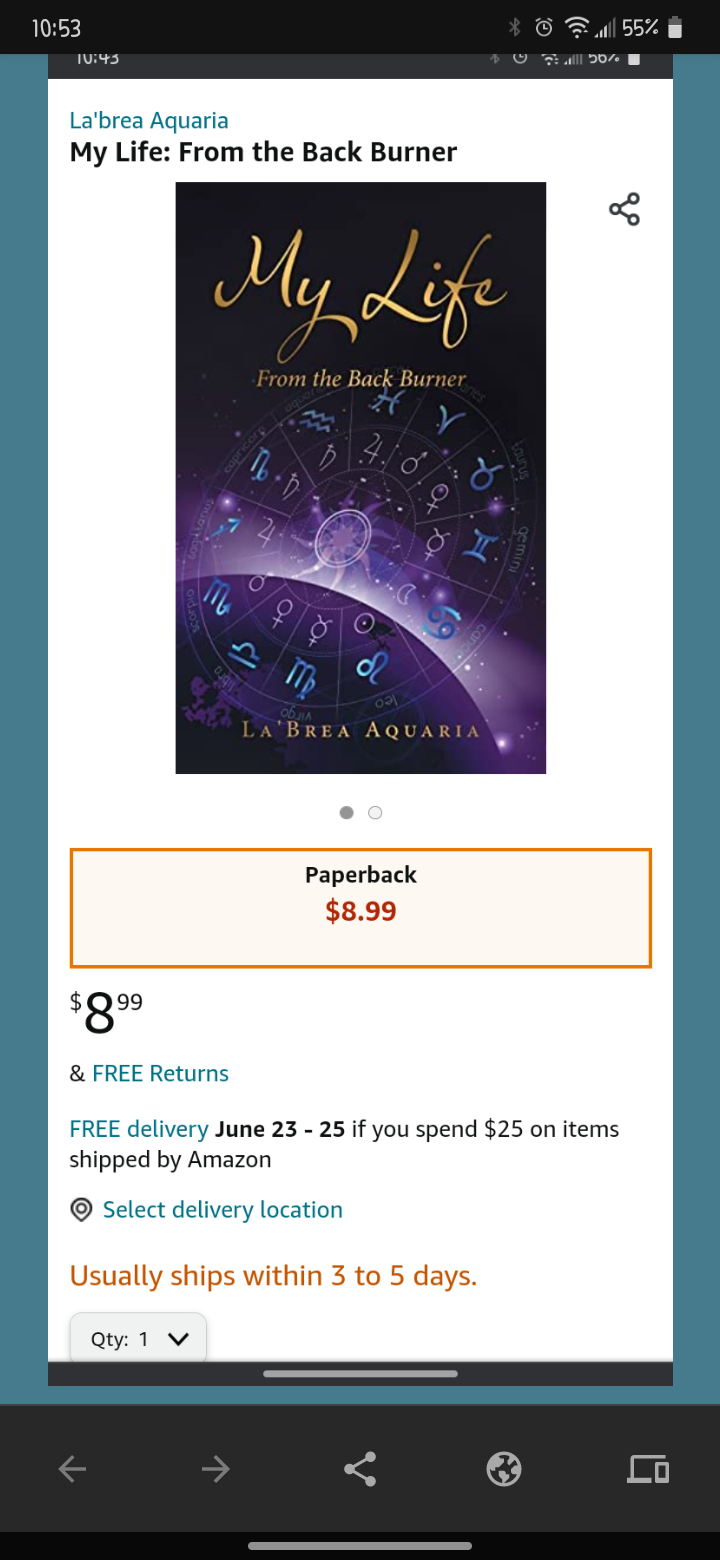



My site is for uplifting and encouraging those that need spiritual advice and guidance.

God is so good to me! What more can I say? He has changed my life for the better. My future is bright. I feel like I am already living in the future. I am living my dream all because of Jesus. I owe it all to Him! Amen!
We all know there is typically far more going on beneath the surface of the biblical text than what we pick up on with a cursory reading or two. This is where resources like the IVP Bible Background Commentary can help fill in the gaps and bring the ancient world to life. Take, for example, the battle between David and Goliath. Maybe you’ve seen the flannel graphs, heard the story at vacation Bible school, and read about it in children’s story Bibles. But how well do you know the details? The drama is in the details, so let’s look at how the IVP Bible Background Commentary draws us into the drama. Israel’s Enemy The first thing the text points out is that the battle lines have been drawn between Israel and the Philistines. “The Philistines gathered their armies for battle. And they were gathered at Socoh, which belongs to Judah, and encamped between Socoh and Asekah, in Ephes-dammin. And Saul and the men of Israel were gathered, and encamped in the Valley of Elah, and drew up in line of battle against the Philistines. And the Philistines stood on the mountain on the one side, and Israel stood on the mountain on the other side, with a valley between them” (1 Sam 17:1-3). The Philistines were a perpetual threat to the people of Israel, well-entrenched in the area, and positioned to seize a main road away from Israel’s possession. Check out these notes on the Philistines and their strategic position: 17:1 Philistines “The group of Philistines that are known through the narratives of 1 and 2 Samuel came into the Palestine area with the migration from the Aegean region of the Sea Peoples about 1200 B.C. It is the Sea Peoples that are generally thought to have been responsible for the fall of the Hittite Empire and the destruction of many cities along the coast of Syria and Palestine, such as Ugarit, Tyre, Sidon, Megiddo and Ashkelon, though the evidence for their involvement in those areas is circumstantial. Their battles with the Egyptian pharaoh Rameses III are depicted on the famous wall paintings at Medinet Habu. This international upheaval is also reflected in the Homeric epic of the siege of Troy. Coming from Crete, Greece and Anatolia, the Sea Peoples may have used Cyprus as a base from which to launch their attacks. Following the repulsion of the Sea Peoples from Egypt, the tribe that came to be known as the Philistines settled on the southern coast of Palestine, where they established their five capital cities of Ashkelon, Ashdod, Ekron (Tell Miqne), Gath (Tell es-Safi) and Gaza. They had overrun Israelite territory in the battle in which the ark was taken (1 Sam 4) and again will do so in the battle in which Saul and his sons are killed (chap. 31). During the reign of Saul there is continual conflict as Saul tries to rid the land of their presence and prevent further incursions.” 17:1 Location of Philistine Camp “Socoh (modern Khirbet Abbad) was a town in the Shephelah Valley about fourteen miles west of Bethlehem near Philistine territory. The site has been surveyed and has produced ceramic remains dated to this time period. Azekah (modern Tell ez-Zakariyeh) was a fortress three miles northwest of Socoh, which controlled the main road across the Elah Valley. The site was excavated earlier this century, uncovering a rectangular fortress with four towers that was dated to this period. This area was of strategic importance to both sides as the main pass between the Philistine plain and the Judean hills. The main road through the Shephelah region heads north from Lachish to Azekah, but about a mile south of Azekah a road goes east following the Wadi es-Sant that opens into the Elah Valley. Ephes-Dammim has not been positively identified but would logically be looked for in this area.” At this point, with the two armies encamped opposite one another, the Philistine warrior-champion Goliath approaches the Israelite army and issues a challenge. “And there came out from the camp of the Philistines a champion named Goliath of Gath, whose height was six cubits and a span. He had a helmet of bronze on his head, and he was armed with a coat of mail, and the weight of the coat was five thousand shekels of bronze. And he had a bronze armor on his legs, and a javelin of bronze slung between his shoulders. The shaft of his spear was like a weaver’s beam, and his spear’s head weighed six hundred shekels of iron. And his shield-bearer went before him. He stood and shouted to the ranks of Israel, ‘Why have you come out to draw up for battle? Am I not a Philistine, and are you not servants of Saul? Choose a man for yourselves, and let him come down to me. If he is able to fight with me and kill me, then we will be your servants. But if I prevail against him and kill him, then you shall be our servants and serve us’” (1 Sam 17:4-9). Notice the details about Goliath’s size: 17:4 Goliath’s Size Goliath’s height is given in the text as about nine and a half feet. It is suspected that he is of the same stock as the Anakim, the giant inhabitants of the land that the Israelite armies were able to defeat in the conquest. The descendants of Anak are generally considered “giants,” though the description “gigantic” may be a more appropriate line of thinking. Champions of this size are not simply a figment of Israelite imagination or the result of embellished legends. The Egyptian letter on Papyrus Anastasi I (thirteenth century B.C.) describes fierce warriors in Canaan who are seven to nine feet tall. Additionally, two female skeletons about seven feet tall from the twelfth century have been found at Tell es-Sa’ideyeh in Transjordan. And his armor: 17:5–7 Goliath’s Armor “Goliath’s helmet was likely the typical Philistine feathered headdress known from Palestinian and Egyptian art. His body armor (“plaited cuirass”) was probably of a well-known Egyptian style of bronze scale armor that covered the entire body, weighing over 125 pounds. One of the best descriptions of scale armor comes from the Nuzi texts, where a mail coat was comprised of anywhere from seven hundred to over one thousand scales of varying sizes. These scales were sewn onto a jerkin of leather or cloth. The front and back were sewn together at the shoulders (with a space for the head) and probably reached to the knees. His greaves were probably made of molded bronze around the entire calf, padded inside with leather, a type known from Mycenaean Greece. His scimitar (NIV: bronze javelin) was probably a heavy, curved, flat sword with a cutting edge on the outer side of the blade. His spear was something like a javelin, with an iron spear point that weighed over fifteen pounds. It may have been equipped with a ring for slinging, a type known both in contemporary Greece and Egypt. Although most of the weapons were made of bronze, the spear point was made of iron. Goliath’s shield was most likely a standing shield, which would have been larger that a round shield.” And his challenge: 17:8–10 Champion Warfare “At times individual combat was used, with the individuals viewed as representatives of their respective armies, so that the divine will could be expressed. Examples of individual combat are known in Egypt on the Beni Hasan wall painting (early second millennium) and in the Egyptian Tale of Sinuhe. It is likewise depicted on a Canaanite vase from the first half of the second millennium. Nearer in time, parallels can be found in the Iliad (Hector against Ajax, Paris against Menelaus) and the Hittite Apology of Hattusilis III. A relief from the tenth century found at Tell Halaf depicts two combatants grabbing at one another’s heads and thrusting with short swords.” Clearly, this gigantic enemy couldn’t get any bigger, nor better equipped for battle, nor could the stakes be higher for Israel. Win and the Philistines will be their slaves. Lose, which seems likely against such a foe, and they will be enslaved. It is no wonder that “when Saul and all Israel heard these words of the Philistine, they were dismayed and greatly afraid” (1 Sam 17:11). This is something the reader should be keen on as well. Who should represent Israel and meet the challenge of this Philistine face-to-face? Well, Israel’s king seems like the obvious choice! Saul is head and shoulders above the rest of Israel (1 Sam 9:2) and an accomplished warrior in his own right (1 Sam 11:11; 14:47-48). That’s what we should be thinking but the text wants us to see something else. Saul’s failures have come to define him, and this is clearly evident in this critical moment. 17:11 Role of King “The text undoubtedly wants to display Saul’s incompetence. The people had sought a king to lead their armies into battle. It was not odd, however, for a king to send out a champion rather than going himself. Even in the event that the king was a great warrior, others would be given the opportunity to prove their skills first. In some senses it would resemble all of the preliminary bouts that precede the “main event” in boxing. As early as the Sumerian epic Gilgamesh and Aka, the practice is seen of the real champion holding back while he sends a capable fighter under his command to engage the enemy. This is also evident in the Iliad, where Patroclus dons the armor of Achilles in order to go out and challenge Hector. Nevertheless, given the amount of time that had gone by, Saul should by now have been willing to take up the challenge himself.” Israel’s Champion The narrative changes scenes from the battlefield to the country farm. The reader is (re)introduced to David (see 1 Sam 16:1-13), who, at this point, is nothing but an errand boy for his father. David is sent by his father to deliver some food for his brothers and their commanders on the frontlines. “Jesse said to David his son, ‘Take for your brothers an ephah of this parched grain, and these ten loaves, and carry them quickly to the camp to your brothers. Also take these ten cheeses to the commander of their thousand. See if your brothers are well, and bring some token from them’” (1 Sam 17:17-18). 17:17–18 Food Supplies “David came to the camp with about half a bushel of roasted grain (either wheat or barley), loaves of bread and cuts of cheese, all of which were favorites for common people. The grain would typically be fashioned into loaves for consumption, and some would likely be made into beer. In Egyptian texts ten loaves of bread, a half a pound of barley and a jug of beer represented a standard daily wage. The Assyrian annals describe soldiers traveling with grain and straw for their horses. Local governors in Assyria were required to open granaries for armies that were traveling through the region. Since the army is in the vicinity of the Judean hills, it is likely that the people from the area were expected to provide supplies.” 17:18 What David is Getting from Them “David was told to ask how his brothers were doing and to ‘pick up their assurance.’ This was likely some sort of token returned with David to confirm that the goods had been provided. This would be proof that Jesse had met his obligations to supply the army and would be the brothers’ way of collecting their rations. An Akkadian (a language from Mesopotamia related to Hebrew) pledge was often a cased clay tablet sent with a messenger.” While David is delivering these goods to his brothers his curiosity gets the best of him. He sees some of the soldiers heading out to the battle line and, perhaps wanting to see a little action himself, heads out to greet his brothers. Precisely at this moment Goliath comes forward and issues his challenge, something he has been doing twice a day going on forty days (1 Sam 17:16). David hears Goliath and hears the men of Israel speaking of Saul’s promise to reward the soldier who kills Goliath. He seeks clarification. “David said to the men who stood by him, ‘What shall be done for the man who kills this Philistine and takes away the reproach of Israel? For who is this uncircumcised Philistine, that he should defy the armies of the living God” (1 Sam 17:26)? The reward is handsome and the notes from the IVP Bible Background Commentary describe it like this: 17:25 Reward for Killing Goliath Ancient kings were often interested in procuring the allegiance of those who had demonstrated military prowess. Marriage agreements in the ancient Near East would often function as political or social alliances between families and thus benefit both parties. Thus the champion’s family would receive important recognition from being connected to the crown, while the king would be allied to the renowned hero who had killed Goliath. The Hebrew says nothing about taxes, only that his father’s house will be free in Israel. Some have compared the Hebrew word to its Akkadian cognate, which sometimes designates a social class. This then would probably describe a family that had become clients of the crown, supported by allocations of plots of land and supplies, which is implied in 1 Samuel 22:7. This type of client class is well known from Mari texts, the Code of Hammurabi and the Laws of Eshnunna. In these texts, individuals received land grants from the crown, likely based upon service rendered to the king. Perhaps more likely is the comparison to another term in Ugaritic texts that refers to a reward for an act of bravery. It exempts the recipient from mandatory service to palace. Saul hears of David’s verbal response to Goliath’s challenge and summons him to speak with him. After attempting to discourage David from fighting Goliath, David recounts his previous successes in defending his sheep from lions and bears. David is confident. “‘Your servant has struck down both lions and bears, and this uncircumcised Philistine shall be like one of them, for he has defied the armies of the living God.’ And David said, ‘The Lord who delivered me from the paw of the lion and from the paw of the bear will deliver me from the hand of this Philistine’” (1 Sam 17:36-37). Saul encourages him on his way and even offers his own armor for David’s use. However, in a slightly humorous part of the passage, David determines that the armor would only hamper his ability to fight. Here’s some notes on Saul’s armor: 17:38–39 Saul’s Armor “The use of protective armor (shields, helmets, coats and greaves) is attested in Egypt and Mesopotamia by the early third millennium B.C. Though rarely found in archaeological contexts, even early portrayal of soldiers depict them wearing heavy armor (for example on reliefs from the Sumerian city of Lagash and from murals from Hierakonopolis in Pre-Dynastic Egypt). The palace of the Assyrian king Sennacherib (seventh century B.C.) exhibits numerous wall reliefs portraying Assyrian military dress and tactics. The king’s tunic and armor would have been very distinctive. If David went out dressed in them, many would have thought that the king himself was going out. Perhaps such a misidentification would have seemed attractive to Saul, who had been sought out by the Israelites to lead them forth in battle. In the Iliad a similar switch occurred when Patroclus went out in the armor of Achilles, hoping to intimidate the Trojans. David’s refusal would have reflected his recognition that without being trained on how to use the armor and weapons to his advantage, they would become a detriment.” Instead, David sticks with the tried-and-true. He keeps his staff and grabs five stones for his sling from a nearby brook. In case our initial impression is that the sling is just a “child’s toy,” here is a description of the sling and its potential in ancient times. 17:40 Sling “Although described simply as a shepherd’s weapon here, the sling was also used in organized warfare, and Goliath would have been well aware of its deadly potential. Assyrian slingers are depicted on the walls of Sennacherib’s palace at Nineveh. In the Babylonian Wisdom composition entitled Ludlul Bel Nemeqi the sufferer reports his deliverance by a variety of metaphors, one of which claims that Marduk took away his enemy’s sling and turned aside his sling stone. Assyrian sling balls were found at Lachish, an Iron Age Judean fortress town. These were the size of a human fist (two to three inches in diameter) and had been used for the successful Assyrian siege of Lachish in 701 B.C. (possibly also by the Babylonians in their siege of Lachish in 587 B.C.). The Benjaminites were known to be deadly accurate with their slings (Judg 20:16), and it is estimated that a skilled slinger could hurl the rocks at more than one hundred miles per hour. The effective range would probably not exceed one hundred yards. The stone was held in a leather pouch with cords attached at opposite ends. The sling was whirled over the head until the person let go of one of the ends.” Though David had experience in fighting off bears and lions and was skilled in using his weapons, his trust was ultimately in the Lord. Unlike Saul, who took matters into his own hands when he shouldn’t have and didn’t when he should have, David was both skilled in his abilities and humble in his faith. This attitude plays a part in his showdown with Goliath as well. After enduring Goliath’s anticipated insults, David counters: “You come to me with a sword and with a spear and with a javelin, but I come to you in the name of the Lord of hosts, the God of the armies of Israel, whom you have defied. This day the Lord will deliver you into my hand, and I will strike you down and cut off your head. And I will give the dead bodies of the host of the Philistines this day to the birds of the air and to the wild beasts of the earth, that all the earth my know that there is a God in Israel, and that all this assembly may know that the Lord saves not with sword and spear. For the battle is the Lord’s, and he will give you into our hand” (1 Sam 17:45-47). The Lord is the basis of David’s boast. 17:45–47 Foundation of David’s Boast “David’s claim would have been acknowledged within the broad theological framework of the ancient world. There are two concepts in tension here. The first is that the stronger, better-equipped warrior is a more effective agent for the gods who are battling. This would be the basis for Goliath’s presumed superiority. David is simply following the logic to its inevitable end to arrive at the second concept. If the gods are, in actuality, doing battle with one another through the human agents, then the strength and weapons of the human combatants are irrelevant. Thus Yahweh is described as Yahweh of Hosts, paraphrased with a military description, “the God of the battle ranks of Israel” (author’s translation), and David’s boast is based on Yahweh’s abilities, not his own. This claim would perhaps be psychologically sufficient to undermine Goliath’s confidence. Similarly in the Iliad Hector acknowledges the superiority of Achilles but suggests that the gods may be on his side and allow him to kill Achilles. In another example, when Hector and Telamonian Aias have fought to a draw, Hector suggests they desist until another day, when the gods will have decided which should win.” After all the hype, the battle is over in an instant. This one doesn’t even get out of the first round. Goliath approaches David probably annoyed and overly confident, while David “ran quickly toward the battle line to meet the Philistine. And David put his hand in his bag and took out a stone and slung it and struck the Philistine on his forehead. The stone sank into his forehead, and he fell on his face to the ground” (1 Sam 17:48-49). Here’s what the IVP Bible Background Commentary has to say about “the shot.” 17:49 David’s Shot “The text offers no information concerning the range between David and Goliath when David took his shot. A stone from a slingshot is capable of delivering a killing blow but only when striking a few strategic areas of the head (which was protected). David’s shot targeted one of the few vulnerable areas that could render his opponent unconscious. This allowed him to approach and secure Goliath’s sword, which he then used to kill his unconscious victim (despite the NIV’s implication that the shot killed Goliath).” After this, there remained only one thing left for David to do and that was to remove Goliath’s massive head from his equally massive body. “David ran and stood over the Philistine and took his sword and drew it out of its sheath and killed him and cut off his head with it. When the Philistines saw that their champion was dead, they fled.” (1 Sam 17:51). It is interesting that David had to remove the sword from its sheath, as if Goliath thought he wouldn’t need it. Maybe he thought the sword would be overkill in a fight against a swordless boy. But it is ironic that Goliath was killed in this way with his own sword. 17:51 Cutting Off the Enemy’s Head “Killing the enemy with his own weapon was not an unprecedented feat. Similarly, Benaiah took the Egyptian’s spear out of his hand and killed him (2 Sam 23:21). In Egyptian literature, Sinuhe killed a soldier from Retenu with his own battle-axe. It can be assumed that Goliath’s head was a trophy that was to be put on display. Assyrian king Ashurbanibal was reported to have dined with his queen in the garden with the head of the king of Elam on display in a nearby tree.” However gruesome this battle scene may appear to our modern sensibilities, we can rejoice in the Lord who works through unexpected people and in very unexpected ways to deliver his people. More than that, we can rejoice in the Lord who established the house of David, from whose offspring comes a greater David, who engages in an even greater battle against a greater foe than Goliath and triumphs in a very unexpected way. May we rejoice in the victory that the Lord has given us in his Son, Jesus Christ, the greater Son of David. Dig Deeper With this resource, you can see how the historical and cultural background of the Bible helps shed light on many of the passages we are familiar with (and those we’re not that familiar with!). Grab yourself a copy of the IVP Bible Background Commentary (2 Vols.) today!


It takes intentionality to reflect on Christ during the busy seasons of our lives. Below, you’ll find an excerpt from the Preaching the Word Commentary on John. We’ve grabbed the section that covers John 1:1-3, a great section for meditating on the eternal Christ and person of Jesus. The Greatness of the Eternal Christ It is rightly said that each of the Gospels presents Christ with a distinctive emphasis. Matthew emphasizes his kingship, Mark his servanthood, Luke his manhood, and John his Godhood. Certainly all of the Gospels present all four truths, but their separate emphases have allowed them unique functions in telling the story of Christ. INTRO TO JOHN John is unique in his powerful presentation of Jesus as the great Creator-God of the universe. His massive vision of Christ has been used countless times to open the eyes of unbelievers to who Jesus is and the way of redemption. This Gospel’s continuing effect on Christians is equally profound because in John’s account believers find an ongoing source for expanding their concept of the Savior’s greatness. The serious student of John will find that each time he returns to the Gospel, Christ will be a little bigger – something like Lucy’s experience with the lion Aslan (the Christ symbol in C. S. Lewis’s Chronicles of Narnia) as she again gazed into his large, wise face. “Welcome, child,” he said. “Aslan,” said Lucy, “you’re bigger.” “That is because you are older, little one,” answered he. “Not because you are?” “I am not. But every year you grow, you will find me bigger.” My hope is that as we work our way through the wonders of this book, we will find Christ bigger and bigger and bigger. The prologue to John’s Gospel (vv. 1-18) is considered to be one of the most sublime sections in all of Scripture. Some believe it was an early Christian “Hymn of the Incarnate Word,” for Christ’s incarnation is its subject, and it is marvelously poetic. Even more, it introduces us to some of the major ideas of the book: the cosmic Christ who came as light into the world, suffered rejection, but gave “grace upon grace” (1:16, RSV) to those who received him. This hymn gives us a sense of the matchless greatness of Christ (vv. 1-3), the greatness of his love (vv. 4-13), and the greatness of his grace (vv. 14-18). As John begins this introductory song, the force of what he says is so staggering that the words almost seem to bend under the weight they are made to bear. The opening three verses are an amazingly congealed expression of the greatness of Christ. THE GREATNESS OF CHRIST (VV. 1-3) In the beginning was the Word, and the Word was with God, and the Word was God. He was with God in the beginning. Through him all things were made; without him nothing was made that has been made. (vv. 1-3) ETERNALLY PREEXISTENT “In the beginning was the Word.” There never was a time when Christ did not exist because the word “was” is in the Greek imperfect tense, which means “was continuing.” In fact, the entire first verse bears this sense. “In the beginning was continuing the Word, and the Word was continuing with God, and the Word was continually God.” Or as one of my friends accurately (though ungrammatically) concluded, “Jesus always was wasing!” That is precisely it. Jesus Christ is preexistent. He always was continuing. Christ is eternal. If you are like me, this kind of thinking makes for a super-headache. Our minds look backward until time disappears and thought collapses in exhaustion. Thus we begin our thoughts of the greatness of Christ. (The same thought can be found in 2 Corinthians 8:9, Philippians 2:6, and Colossians 1:17.) ETERNALLY IN RELATIONSHIP Next the apostle adds, “and the Word was with God.” Literally, “the Word was continually toward God.” The Father and the Son were continually face to face. The preposition “with” bears the idea of nearness, along with a sense of movement toward God. That is to say, there has always existed the deepest equality and intimacy in the Holy Trinity. Again our minds stagger as we think of Jesus as always having continued (without beginning and without end) in perfect joyous intimacy with the Father. ETERNALLY GOD Moreover, as the final phrase of verse 1 adds, “and the Word was God.” The exact meaning is that the Word was God in essence and character. He was God in every way, though he was a separate person from God the Father. The phrase perfectly preserves Jesus’ separate identity, while also stating that he is God. This was his continuing identity from all eternity. He was God constantly. The simple sentence of verse 1 is the most compact and pulsating theological statement in all of Scripture. Jesus was always existing from all eternity as God, in perfect fellowship with God the Father and (though not mentioned) the Holy Spirit. He is the cosmic Christ. Learn More! Did you enjoy this excerpt? We pulled it straight from the Preaching the Word Commentary. Click here to get a copy!


When you download the app, you can get this Bible and many others for free, including other books as well. Download the app today and start looking at the Word of God in a brand new way. God bless.
The Berean Standard Bible (BSB) is a completely new English translation of the Holy Bible effective for public reading, study, memorization, and evangelism. Based on the best available manuscripts and sources, each word is connected back to Greek or Hebrew to produce a transparent text that can be studied for its root meanings. It is the result of a careful translation and styling process to maintain core meanings and produce an English text of high literary quality. This version contains the full BSB text, footnotes, section headings, and cross references. Also included are translation tables, lexicons, outlines, and summaries. The Berean Bible Translation Committee works with three levels of input and decision making. Public comment and evaluation is received from teachers, pastors, and students on freely available translation tables. On the next level, a translation team consisting of the Bible Hub and Discovery Bible teams handles the core work and coordination. This team has been responsible for a large part of the translation, styling, consistency checking, and proofing. Supervising the translation process, finalized translation decisions, and directed the use of Greek, Hebrew, and Aramaic sources is the Bible translation team, which includes Dr. Grant Osborne (NT lead), Dr. Eugene H. Merrill (OT lead), Dr. Gary Hill, Dr. Maury Robertson, Dr. Ulrik Sandborg-Petersen, and Dr. Baruch Korman. Free offer ends July 31, 2022. Click below to get a copy today! TAP HERE for the Berean Standard Bible

What God Has To Give To You // Giving & Receiving • Devotional https://bible.com/reading-plans/16138/day/1?segment=0



From the Heart of the Giver There once was a person who gave everything he had. He did it because much had been given to him. Nothing he had was his before it was given, so he did not hesitate to give in the same way that it had been given to him. If he had believed that what he was given was his own, due to his own talents, his own strength, his own efforts, then he would have struggled to share his wealth. “But it was never mine to keep,” he thought. “So if it is not mine in the first place, how can I not give back in the same way that it was given to me?” Whether the man had a lot or had little, at any given point in time, his attitude was always the same. When he had much, he was able to give away much. When he had little, he still gave away a portion of what he had. And because he did not hold on to what he had been given—because he did not keep it all for himself—his heart was pure. He was more easily able to remember that everything he had been given, in the first place, was given to him freely, as a gift. “How could he not give in the same way that he had been given?” he asked himself. “And what if his giving encouraged more giving in others,” he thought. The gift will keep on giving, then. “It will grow and produce and spread,” he thought, “if I do not hold on to it, keeping it to myself.” It is from a pure heart of the giver that a gift multiples—its good increasing—again and again. When I speak of this to you, it is not to lecture you. For I am your Father, and I teach you many things. It is in my love that I teach, that I shepherd you, that I instruct you of what is good for you. I do this because my love for you is deep and wide and beyond measure. I don’t hold back on my love for you. I want you to understand how giving from the resources I give you is good for your heart. When you forget to give to others what you have been given, you forget Me. You forget my love for you. You forget that I have given you everything. I don’t say this to make you feel guilt. I say this because I want you to grow in your love—to receive more and more of what I have to give you. And when you give what you have been given, you are practicing the same love I give to you. You are giving from my own heart. You are becoming more and more like Me. Think of the ways I give to you—think of the ways in which I love you. I love you from an abundant love, from a love that does not skimp and worry and reserve itself for good behavior. I give because I am love. I give because it is who I am. And because you are my child—my son, my daughter, and all I have is yours, I ask you to follow Me and give in the same ways that I give: give from knowing that all that you have has been given to you. Give from knowing you are loved. Give from knowing that nothing you give to others will be wasted. For when you give with the pure heart I give you—from the place of knowing that all I have is yours, and all you have is mine—we are giving together; we are participating in the action together. And you will feel fulfilled in how you give; you will be filled with joy in what you give. For you will not be doing it alone. You will be doing it with Me. Do not forget my love for you. And my delight in fathering you. You are my child. You are the one I love. I would give everything again and again for you. And now I invite you to do the same. Practice giving from your full heart. Practice giving from what I give. Then nothing will ever be wasted. It will grow and grow and grow. Exercise: Jennifer and I just love this invitation. What it is, is an invitation into an entirely new kind of life. And it’s a challenge too, because it is not an easy thing to move into. It takes some real trust. It takes a step out into the unknown—with our heavenly dad. It’s an invitation into life where we begin to grasp the fact that everything He has is ours. Scripture says, “Long before he laid down earth’s foundations,” God chose us and “settled on us as the focus of his love.” That’s from Ephesians chapter 1. He chose you to be His beloved son, His beloved daughter. He chose me. He “predestined us for adoption to himself.” He gave us “full legal adoption as his children.” That’s from Galatians chapter 4. And “because we’re his,” wrote the apostle Paul—because we are His very own sons and daughters—we can “access everything our Father has. Let me say that again. We get everything. Because we are His, we get access to everything our Father has. It’s hard to get your mind around, isn’t it? It sure puzzled and amazed King David. Looking at everything God created, David asked: “Compared to all this cosmic glory, why would you bother with puny, mortal man or be infatuated with Adam’s sons?” (TPT, Psalm 8:4) We don’t deserve it, and it doesn’t make sense—but we get it nonetheless. God, in his outrageous love, made us—you and me—His heirs. He gives us access to everything. So, whether we see it or not, whether we’re willing to accept it or not, we live in a state of abundance—not the kind of scarcity that our world and our culture tries to convince us we live in. And so, we actually do not have to worry and scrape and compete and protect ourselves all the time—like our culture teaches us to do. Because we are His, we can access everything our Father has. So, all we need to do is just act like sons and daughters. We just need to live into our inheritance as beloved sons and daughters. We need to trust Him. Trust that He will come through for us. We need to relent and surrender into trust—knowing that we are blessed, richly, now. Knowing that we are cared for, always. Knowing that we will continue to be blessed . . . in surprising ways and perfect timing. And why? Why have we been so blessed? Well, we’re blessed so that we can do what our heavenly dad does. We are blessed so we can bless others. So we can give away, freely, what we’ve been given. So we can give knowing that we’ll always be taken care of by our heavenly dad. Paul knew it. He wrote, “I am convinced that my God will fully satisfy every need you have, for I have seen the abundant riches of glory revealed to me through the Anointed One, Jesus Christ!” That from Philippians chapter 4. King David knew it. He sang, “The Lord is my best friend and my shepherd. I always have more than enough.” Let’s go back to what Holy Spirit said just moments ago. He said: “Do not forget my love for you. And my delight in fathering you. You are my child. You are the one I love. I would give everything again and again for you. And now I invite you to do the same. Practice giving from your full heart. Practice giving from what I give. Then nothing will ever be wasted. It will grow and grow and grow.”

What God Has To Give To You // Giving & Receiving • Devotional https://bible.com/reading-plans/16138/day/2?segment=0


even as the Son of man came not to be ministered unto, but to minister, and to give his life a ransom for many. Matthew 20:28 KJV https://bible.com/bible/1/mat.20.28.KJV


Starting now receive huge deals on select best-selling titles! Enhance your Bible study with savings on commentaries, study Bibles, Greek study titles and more. 50% Off! NLT Life Application Study Bible, 3rd Ed. 50% Off! New! AGNT-5 (Innovating Presentation) 60% Off! New Daily Study Bible: NT (17 Vols.) 75% Off! Interpretation Commentary (43 Vols.) All Discounted Titles! See the entire Summer Sale



William MacDonald’s Believer’s Bible Commentary offers a concise, accessible, yet thorough commentary that will equip newcomers to the faith and seasoned believers alike to make Bible study a part of their daily life. Covering every verse of the Bible, it furnishes reverent, reliable, and comprehensive help. Tackling difficult passages head-on, it seeks to provide a clear understanding using a balanced approach. This revised and expanded second edition of Thomas Nelson’s bestselling commentary now includes fourteen pages of full-color maps of the Holy Land along with additional study aids. The Believer’s Bible Commentary is designed to be used with any Bible translation and yields a friendly guide to exploring the deeper meaning of every biblical book. Get to know the author: William MacDonald was President of Emmaus Bible College, teacher, Plymouth Brethren theologian and a prolific author of over 84 published books. MacDonald refused to accept royalties for his books, but established a fund for translating his work Believers Bible Commentary into foreign languages. Save 50% Believer’s Bible Commentary


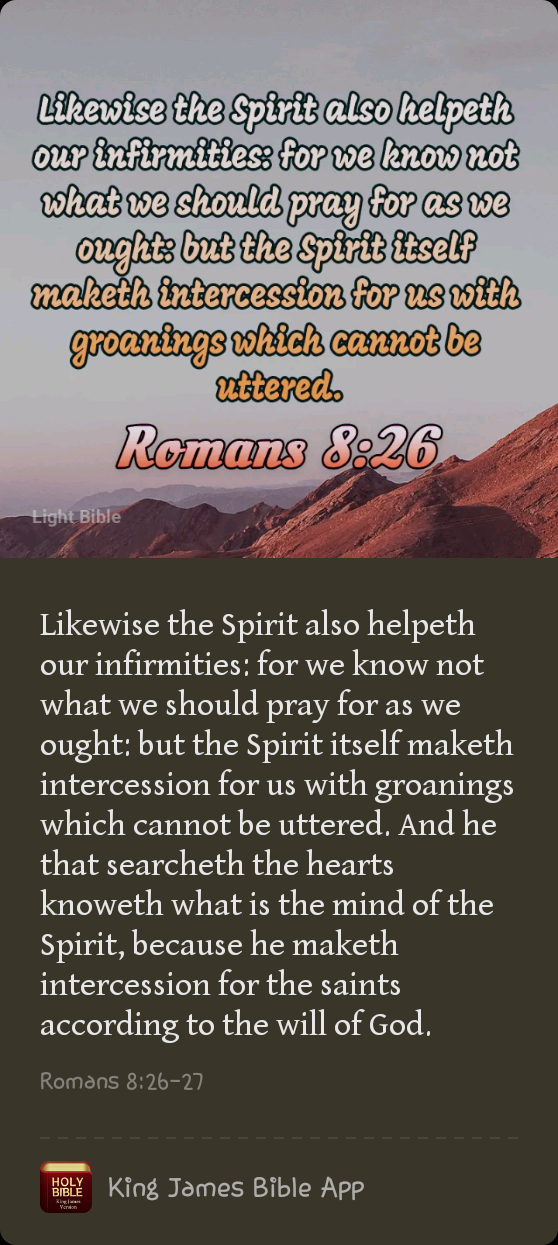



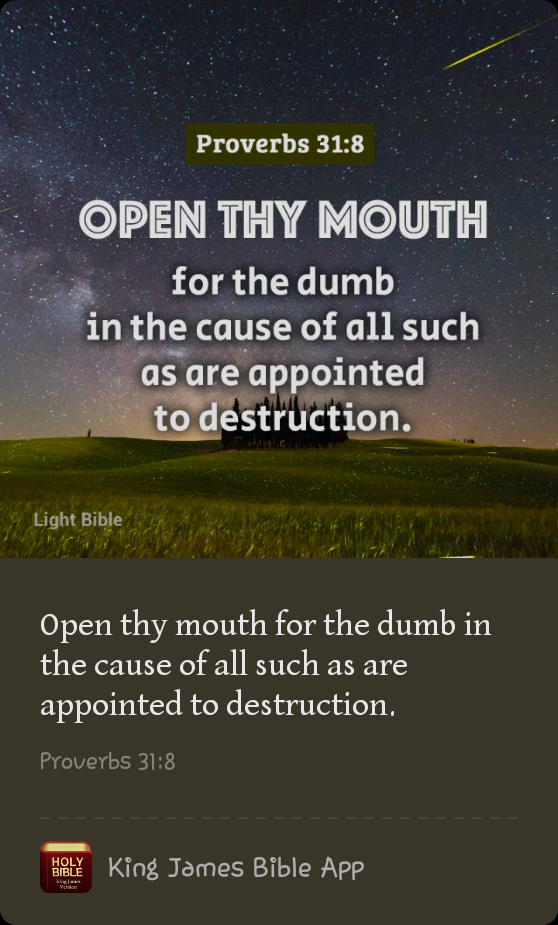

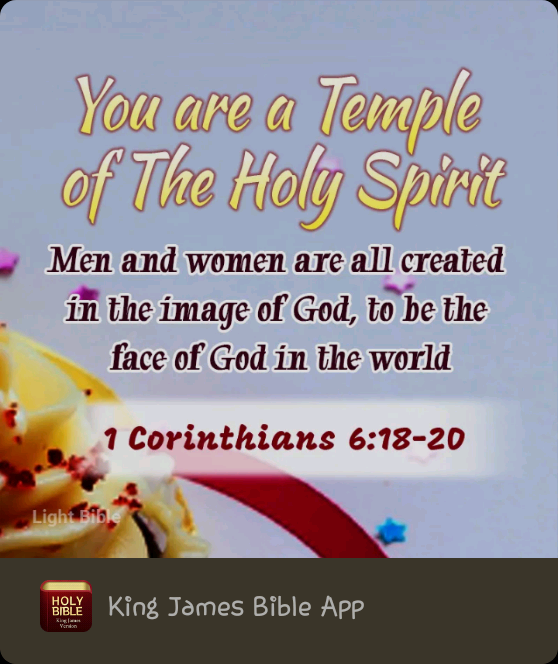







 Food for the Soul