100 Gratitude Affirmations for Building a Thankful Life
Here are 100 gratitude affirmations to manifest more gratitude and joy in your life!
Hey there! Let’s bring the light of gratitude to our day with 100 gratitude affirmations.
Positive affirmations are one of the most-loved parts of my FREE 💗 21-day Self Love Course. Students experience guided affirmations audio sessions every day ranging from topics like gratitude, confidence, self-acceptance, self-worth, etc.
100 Gratitude AffirmationsListen to more such affirmations on Gratitude app
I am grateful for many things in my life that bring me joy and comfort.
I trust that what’s meant for me is already mine, regardless of how and when it is mine.
I am worthy of beautiful endings and exciting beginnings.
I allow my voice to be heard, my thoughts to be expressed and my vision to be seen.
I am open to things working out for me. I am open to receiving abundance. I am open to connecting with my highest self.
I am eternally grateful for all of the blessings I have in my life.
I am happy and grateful for everything I have and receive daily.
I constantly remind myself to enjoy all the good I have in my life right now.
I express deep appreciation for the small steps I achieve each day.
With every breath I take, I am bringing more and more gratitude into my life.
Today, I will concentrate on taking one step forward, however small.
My life is meaningful and important; I am a valuable contributor to the greater good.
I am worthy because I say so. My worth is in my hands.
I release the amount of pressure I put on myself.
I give myself permission to trust myself, my guidance, and my intuition.
All the good in my life comes to me as a result of my willingness to find happiness in each moment.
Every kind word I express comes back to me multiplied.
Everything that is happening now is happening for my ultimate good.
I realize there will be obstacles but I have the strength to get through them.
I choose to be kind to myself and love myself unconditionally.
I see problems as challenges that evolve me and make me grow.
I always treat others the way I expect to be treated.
Each day even if it’s for a few minutes I’m going to stop and be grateful for all of life’s beauty.
Every day I’m going to be more mindful of all of the small blessings that I should be thankful for.
I am thankful that with each experience I become a better version of myself.
I create the possibility of happiness for others by being happy.
It does not matter what other people say or do. What matters is how I choose to react and what I choose to believe about myself.
I return to the basics of life: forgiveness, courage, gratitude, love, and humor.
I am creating a life that feels good and I am in charge of my happiness.
Happiness is within me. I base my happiness on my own accomplishments and the blessings I’ve been given.
I am humble and continue to learn every day.
Being kind toward others is very important to me, and I exercise kindness throughout my day.
As I focus on compassion, I naturally relate to others with love and understanding.
I am not afraid of what could go wrong. I am excited about what could go right.
Where I think I am lost, I am ready to feel found.
As I forgive myself, it becomes easier to forgive others.
I have the freedom and power to create the life I desire.
Day by day and thought by thought, I am creating my ideal life!
I am grateful for everything, the good and the bad because it made me.
I am ready to encounter opportunities I never thought were possible.
Today, I choose to think positively and create an amazing and successful life for myself.
Each day, I am bold, and I walk on my path with courage!
I am the architect of my life. I build its foundation and choose its contents. I decorate my life with hope, healing, and gratitude.
Self–acceptance, self–love, and self–care are the habits that I choose to cultivate. I am practicing loving my life.
I trust myself and turn inward to seek my highest truth.
I am worthy of great love and I deserve to be loved fully and completely.
Each and every day I learn new lessons, expand my awareness, and develop my abilities.
Today I am planting the seeds of growth in my life. I am absolutely committed to watering them every day.
I am focusing on the joy of living my life and helping others where and when I can.
Every person on this planet enriches my life in some way or another. I am thankful to all.Thankful Affirmations
I realize that every situation in life has some purpose and I thank the Universe for it.
The air I breathe, the ground I walk on, are all a gift from the Universe, I express my gratitude for the same.
I am thankful to the Universe for allowing me to take birth and go through life’s experiences.
I am grateful to the universe for manifesting all the wonderful things in my life so far.
With a sense of gratitude, I see the world in a new light. Each day is an opportunity and a gift.
I am grateful for my sense of gratitude – I know it is the way to joy, peace, and the life of my dreams.
I live in a state of gratitude and I am always thankful for the help and support of others who have helped me along the way.
Every day is a constant state of learning. Today, I am finding ways to be grateful for what I have while also being excited about what is yet to transpire.
Wonderful things happen to me for I live with an attitude of gratitude.
The more I show my gratitude, the more good things I receive to be thankful for.
I start each day with an attitude of gratitude and sustain that attitude all day long.
I know gratitude is a daily choice and I choose to be grateful.
I am grateful to others for the kindness they show me. I am filled with praise and gratitude.
I realize that whatever I eat and drink passes through many hands before reaching me. I am thankful to all these people.
Gratitude changes my focus on what is good in my life.
With an attitude of gratitude, I live in an awareness of abundance and I am richly blessed.
Every day I take time to acknowledge all the good that blesses my life.
I am so happy and grateful that I am the creator of my reality.
Today I am grateful to be alive and filled with serenity and happiness.
Today I will look for the beauty and the gifts in these moments of struggle. I will be grateful for each and every one of them.
Every day in every way I get better and better.
I give myself the care and attention that I deserve.
I am grateful for my body and the life I have.
With every breath I take, I am bringing greater and greater clarity into my life.
I have the energy and passion to make my thoughts a reality.
My heart is open and receptive to giving and receiving love. I am a magnet for positive loving experiences.
I deserve to be happy and loved.
I am willing to believe that things will work out, even if they don’t feel like it.
I sincerely appreciate all the good things in my life. I sincerely appreciate all the help I receive from others.
I am in the process of becoming the best version of myself.
I am forever grateful for all the technologies that allow me to keep in touch with my loved ones.
I allow my creative energy to flow freely at all times.
I am grateful for another day to make a positive contribution.
I accept my emotions and let them serve their purpose.
I forgive myself and I allow myself to feel inner peace.
I welcome and appreciate the good things life has to offer. It is my greatest desire to live each and every day with unlimited gratitude.
I am learning valuable lessons from myself every day.
Today, I choose to think positively and I create an amazing and successful life for myself.
I give myself permission to do what is right for me.
I accomplish everything I set my mind to.
I am a beautiful, unique soul and I acknowledge that my existence and contribution on this planet are needed.
I put my energy into things that matter to me.
I am grateful for my life’s challenges for helping me grow and become who I am.
I am grateful for my dreams and I know I have the power to manifest them.
I love myself, respect myself, and accept myself exactly as I am.
I choose to be kind to myself and love myself unconditionally.
Happiness begins with me and me alone. I have the power to create my happiness.
I am eternally grateful for the love I am capable of giving, and for the love, I am yet to receive.
Each day I am so grateful for how loved I am and much people care about me.
Life gives me abundant blessings to be grateful for.
Continue Reading: 100 Gratitude Quotes For a Grateful LifeTake the 15-day New Year Challenge
Start FREE Challenge
Aarushi Tewari
The writer and affirmations speaker at Gratitude, Aarushi believes that one of the most effective ways of feeling inner peace is by being grateful and having a loving self-relationship.15-day New Year Challenge
Starting January 1
🌻
Begin the new year with a positive outlook
💖
Start fresh every day with a new prompt
📝
Examples to help you get ideas
⏰
Reminders to keep you on trackStart FREE Challenge
Related readsQUOTES
4 MIN READ
50+ You Are Beautiful Quotes You, Her & Everyone
Feel beautiful!AFFIRMATIONS
3 MIN READ
100 Sunday Affirmations to Celebrate the End of The Week
Let’s make the most of the end of the week.AFFIRMATIONS
3 MIN READ
100 Saturday Affirmations to Enjoy a Restful Weekend
Make the best of the best day of the week!Take the FREE New Year Challenge
15-day daily guided journaling
Start Challenge
Maybe Later
GRATITUDE
Motivation for Today

Here’s a quote from my Gratitude app to inspire you today 💫 https://gratefulness.page.link/ivos
Daily Zen

Here’s a beautiful quote from my Gratitude app to brighten your day 😇 https://gratefulness.page.link/yqbs

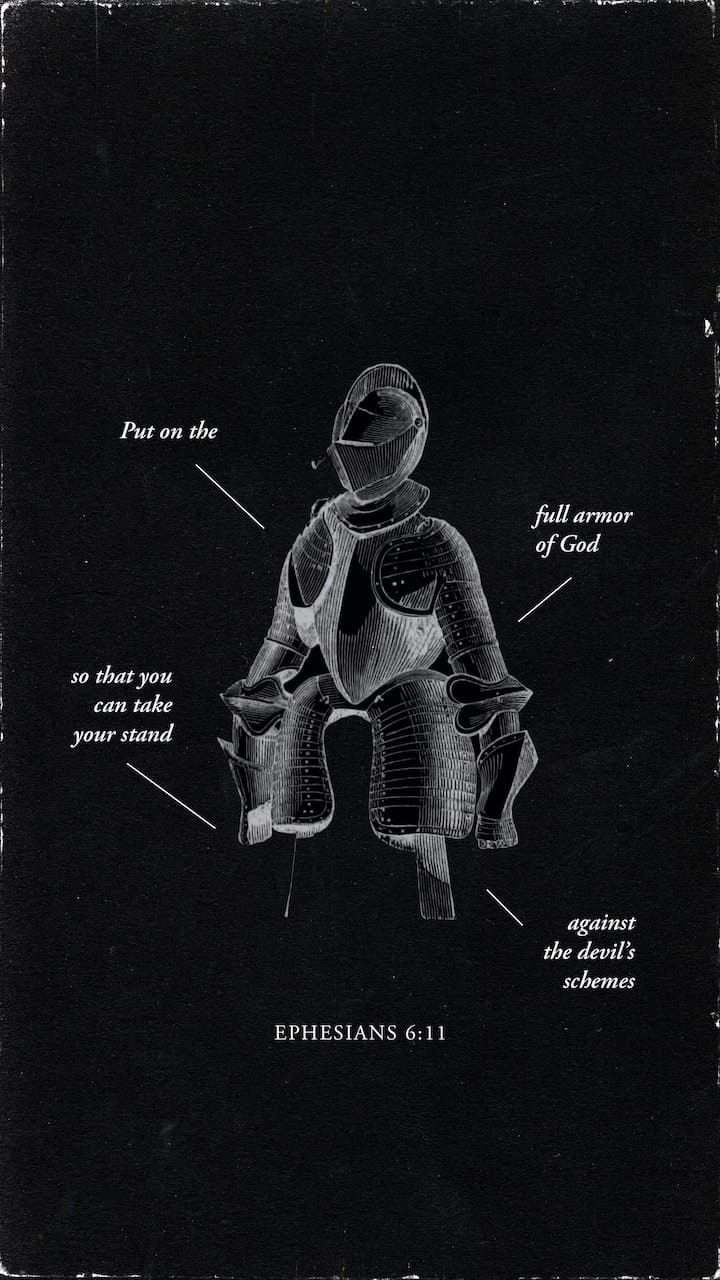 bible.com/bible/1/eph.6.11.KJV


 www.bible.com/reading-plans/18921/day/3


 bible.com/bible/1/eph.6.11.KJV




Sprinkle of Jesus Bible App
Check out:
https://apps.apple.com/us/app/sprinkle-of-jesus-daily-quotes/id1435987567
click on the link above, or go to the play store and download the app, it can also be downloaded on Android as well. God bless.
Devotion: Mark 9:24
This father brought his afflicted son, who had suffered from childhood, to see if Jesus would heal him. He first ran into Jesus’ disciples and asked them for help, but they could not. By the time he finally gained Jesus’ attention, there had to be a growing doubt in his mind as to whether his son could ever be healed.
And the instant he comes into the presence of Jesus, his son wallows on the ground, foaming at the mouth. He timidly puts his request to Jesus, “If thou canst do anything… help us.” Only to have Jesus throw the ball back in his court, “If thou canst believe, all things are possible.”
How this father must have struggled to find the right words, the right response. Finally, through his tears, he gives this confession:
First, he calls Jesus his Lord. He knows Jesus has authority that is not of this world and humbles himself before him. Then he cries out, “I believe!” This is not an arrogant presumption that he has the faith Jesus requires, but a sincere statement of why he came to Jesus in the first place.
Finally, he admits his fear and doubt, and runs to the right place for help: “Help thou mine unbelief.” Without realizing it, this father displayed exactly what great faith looks like!
Genuine faith does not trust in one’s own ability to believe, to work, or to obey. True faith looks to Christ to fulfill all our gaping inadequacies.
Do you feel yourself doubting? Falling? Giving in? Don’t try to hide your struggles or difficulties from Jesus; take them to him, confess them to him, and let his grace supply your every need.


Devotion: Psalm 17:15
God, who is holy and wholly good, cannot countenance even the presence of evil (Habakkuk 1:13). Yet, when believers die they go straight into the presence of the Lord (2 Corinthians 5:8). How can this be?
David by faith says, I will behold thy face in righteousness. Somehow this sinner will — between the moment of death and the moment of waking in your presence — be made perfectly and completely righteous. My record will be cleaned, my heart will be chaste, my mind will be pure.
And what does perfection look like? It looks like Jesus Christ. It is the righteousness of Christ which will allow me to stand before the holy face of God. That is why God predestinated his people to be “conformed to the image of his Son” (Romans 8:29).
Heaven is, as earth should be, Christ-centered. It is for this reason that David also declares, I shall be satisfied when I awake in thy likeness. The great satisfaction, the great reward, of heaven is experiencing the presence of Christ and being made like to Christ. Heaven is, ultimately, not about being reunited with deceased love ones, or being healed from all sickness — heaven is all about Jesus.
That is why, in Revelation, the throne of the Lamb is the center of attention; that is why the psalmist writes, “Whom have I in heaven but thee?” (Psalm 73:25). And that is why John was told to write “Blessed are the dead which die in the Lord” (Revelation 14:13); only those in Christ are blessed in death.
But those who are in Christ awake in his likeness and in his presence… and therefore to complete and lasting satisfaction.


Devotion: Psalm 113:3
No matter where you come from, where you live, or where your life may take you, your purpose is the same — to praise the Lord in all you do, say, and think. From the place of the sunrise, to the horizon where it sets, God is worthy of adoration.
And he deserves our honor no matter the time of day or night. When we are commuting to work in the morning, changing diapers during the day, or doing homework at night we are to do all to the glory of our Savior. May never a day pass that we have not done something to consciously advance the fame of Jesus Christ.
But his name is also to be praised at every stage of life. If you are young and energetic, in the “morning” of your life, God is due your obedience and worship. If you are nearing the sunset of your life, then you have an increasingly powerful witness, as God more and more shows his strength in your weakness.
There is no place, no time, no stage in life in which our great concern should not be to bring glory to our Maker and Savior. Will you praise him right now, right here, in this time of your life and in the place that God has uniquely positioned you for his glory?


Devotion: 1Peter 2:9
Salvation is of the Lord. That is the point of Peter’s reminder: you are a chosen generation. As Jesus himself affirmed, “Ye have not chosen me, but I have chosen you” (John 15:16).
And what a salvation you have been chosen to! You are now a royal priesthood, a sacred and set apart nation, a distinctive people. The saints in heaven sing praises to the Lamb because he has “made us unto our God kings and priests” (Revelation 5:10).
But this wonderful gift of salvation is not, ultimately, man-centered. It is not primarily about us at all. Salvation was planned before creation, executed at the cross, and delivered to you by the Holy Spirit that ye should show forth the praises of the God who saved you.
God saved you for your good and for his glory. He brought you out of sin, and drew you to himself, and delivered you from hell so that his power and grace and justice and purity would be displayed in your salvation and in your life.
This, then, is the great work of evangelism. Not some artificial salesmanship, but an authentic display of the joy that you have found in Jesus, that others might see and know him through you.




 Food for the Soul