Love this❤ Shared from Bible Verses: Daily Devotional app – https://bibleverses.app
#bible #bibleverse #bibleverses #bibleversesdaily #bibleverseoftheday #biblequotes #biblequote
This is What Jesus Did: Mark 9:36-37

My site is for uplifting and encouraging those that need spiritual advice and guidance.
#bible #bibleverse #bibleverses #bibleversesdaily #bibleverseoftheday #biblequotes #biblequote

Love this❤ Shared from Bible Verses: Daily Devotional app – https://bibleverses.app
#bible #bibleverse #bibleverses #bibleversesdaily #bibleverseoftheday #biblequotes #biblequote

Love this❤ Shared from Bible Verses: Daily Devotional app – https://bibleverses.app
#bible #bibleverse #bibleverses #bibleversesdaily #bibleverseoftheday #biblequotes #biblequote

Love this❤ Shared from Bible Verses: Daily Devotional app – https://bibleverses.app
#bible #bibleverse #bibleverses #bibleversesdaily #bibleverseoftheday #biblequotes #biblequote

Looking for a new way to refresh your Bible study? The Bible is multi-faceted and can be approached from a number of perspectives…
We can read it chronologically:
We can read it with the help of a commentary:
We can read with different translations:
We can listen to the Bible:
We can read and study with a variety of unique tools:

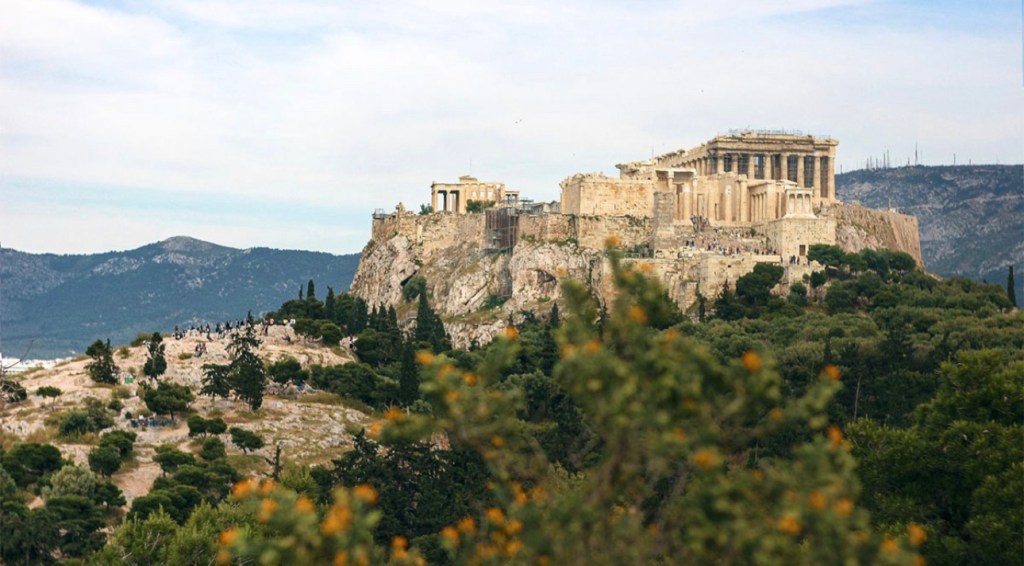
After being rushed away from yet another city, Paul found himself in Athens with some time on his hands as he waited for Timothy and Silas to join him. What he witnessed in Athens caused “his spirit [to be] provoked within him when he saw that the city was given over to idols” (Act 17:16). So, as was his custom, he spoke in the synagogue and the busy marketplace about the true God, and this drew the attention of the local philosophers. Paul did not impress them with what he was saying. But they wanted to hear more and brought him before the Areopagus to hear “what this new doctrine is” (Acts 17:19), the doctrine of Jesus and the resurrection (Acts 17:18). Let’s take a further look at how Paul makes the unknown God known to the “men of Athens” with some help from the Chronological Study Bible (NIV and NKJV).
“Therefore he reasoned in the synagogue with the Jews and with the Gentile worshipers, and in the marketplace daily with those who happened to be there. Then certain Epicurean and Stoic philosophers encountered him. And some said, ‘What does this babbler want to say?’
Others said, ‘He seems to be a proclaimer of foreign gods,’ because he preached to them Jesus and the resurrection.
And they took him and brought him to the Areopagus, saying, ‘May we know what this new doctrine is of which you speak? For you are bringing some strange things to our ears. Therefore we want to know what these things mean.’ For all the Athenians and the foreigners who were there spent their time in nothing else but either to tell or to hear some new thing.” – Acts 17:17-21
The Epicureans
In Athens, Paul encountered the Epicurean and Stoic philosophers (Ac 17:18). Epicureans, who held little influence outside the academic elite of their day, dismissed popular Greek notions about the gods. If deities existed, Epicureans argued, one could know them only in terms of physical phenomena like stars or planets. In Epicurean philosophy the supreme goal was pleasure, defined especially as the absence of pain.
The Stoics
By contrast, the more popular Stoics opposed pleasure, criticized Epicureans, and usually professed belief in the gods. Nevertheless, Stoics had interpretations of the gods that were quite different from those held by the common people. Sometimes Stoics focused on the supreme deity, whom they saw as ruling and permeating the universe.
Paul could not appeal simultaneously to both of these groups as he addressed them at the Areopagus. Most of what he says fits both Christian and Stoic teaching (Ac 17:22–29). Only after he had won his audience’s ear did he present distinctive Christian theology (17:30, 31). We can known the unknown God only in his Son, Jesus Christ.
In 399 B.C. the council of the Areopagus had accused Socrates of introducing new gods, so with the charge against Paul of proclaiming “foreign gods” (17:18) the Athenians were treating him as they had their most famous thinker. Such a charge had once been a capital offense in Athens; they had stoned to death a priestess for the same crime.
The “Babbler”
Paul’s philosophic critics called him a “babbler”(17:18). In Greek, the term originally referred to birds pecking up grain, but by Paul’s time it meant worthless persons—perhaps somewhat like the traditional American insult “birdbrain.” Yet this “babbler’s” sermon was not a failure, and resulted in new believers, including the influential Dionysius (17:33, 34). The unknown God became known. A tradition from Eusebius reports that Dionysius the Areopagite became the first Christian bishop of Athens.
“Then Paul stood in the midst of the Areopagus and said, Men of Athens, I perceive that in all things you are very religious; for as I was passing through and considering the objects of your worship, I even found an altar with this inscription:
TO THE UNKNOWN GOD.
Therefore, the One whom you worship without knowing, Him I proclaim to you: God, who made the world and everything in it, since He is Lord of heaven and earth, does not dwell in temples made with hands. Nor is He worshiped with men’s hands, as though He needed anything, since He gives to all life, breath, and all things.
And He has made from one blood every nation of men to dwell on all the face of the earth, and has determined their preappointed times and the boundaries of their dwellings, so that they should seek the Lord, in the hope that they might grope for Him and find Him, though He is not far from each one of us; for in Him we live and move and have our being, as also some of your own poets have said, ‘For we are also His offspring.’” – Acts 17:22-28
Paul spoke about the unknown God at the Areopagus, whose name was associated with Ares, the Greek god of war (Ac 17:22). In Greek, the name “Areopagus” means “hill of Ares” or “Mars’ Hill.” It is the name of a hill below the Acropolis in Athens, and also of the traditional law court of Athens, which once met on or near the hill. A little farther from the Acropolis and below the Areopagus was the agora, the city marketplace.
“And when they heard of the resurrection of the dead, some mocked, while others said, ‘We will hear you again on this matter.’ So Paul departed from among them. However, some men joined him and believed, among them Dionysius the Areopagite, a woman named Damaris, and others with them.” – Acts 17:32-34
In A.D. 50 Paul visited Athens and began preaching in the agora, the marketplace which in ancient Greece served as the center of public life (Ac 17:17). Paul was summoned by the Athenians to the Areopagus, where he preached his sermon about the “unknown God”(Ac 17:19–23). The purpose of his visit to the Areopagus and its council is not certain, but he may have been on trial to defend his beliefs. We know of one individual from the Areopagus council, Dionysius, who became convinced of the truthfulness of Paul’s message (Ac 17:34).
The Areopagus was a prominent hill in Athens (nearly 400 feet high). Although ancient references to the council of the Areopagus are few, it is evident that it was an aristocratic body that advised the king. It then assumed royal functions after the Athenians deposed their monarchy (sometime before 800 B.C.). With the rise of democracy in 500 B.C. the council lost some of its power and became largely an esteemed group with religious functions.
By the 1st century A.D. the council of the Areopagus had regained much of its former authority. The assembly to which Paul preached was again the chief governing body in Athens, a position it would keep until the advent of Christian domination in the 4th century A.D.
These Chronological Study Bibles help you read and study the Bible as it unfolds in historical order.
Interested in learning more? Grab one of the translations below:


The word “business” here refers to any responsibility or activity in which we might be engaged, not just career or financial obligations.
Paul exhorts us not to be slothful, or lazy, in anything that we do. Whether you are parenting, or studying, or working, or ministering you should do it to the very best of your ability. As Solomon so wisely advised, whatever you hand finds to do, “do it with thy might” (Ecclesiastes 9:10).
Sadly, sometimes we confuse our American rights with our Christian rights, and we begin to grumble and complain and get by with as little as we can. But Christians should be the most conscientious and virtuous employees, husbands and wives, or citizens, no matter where they are or what their circumstance.
Why? What is the motivation for such constancy and integrity, even in the midst of a lazy and selfish culture? Paul reminds us simply that we are “serving the Lord.”
No matter what responsibility or opportunity we may be given, we are ultimately to understand that it comes from God and that we are to perform the duty for his sake, for his pleasure. We are serving the Lord.
Do not settle for a mediocre effort and do not have an ungrateful disposition. As you change diapers, or give presentations, or sell products, or take tests — whatever you do, do it with all your might, in service to the Lord.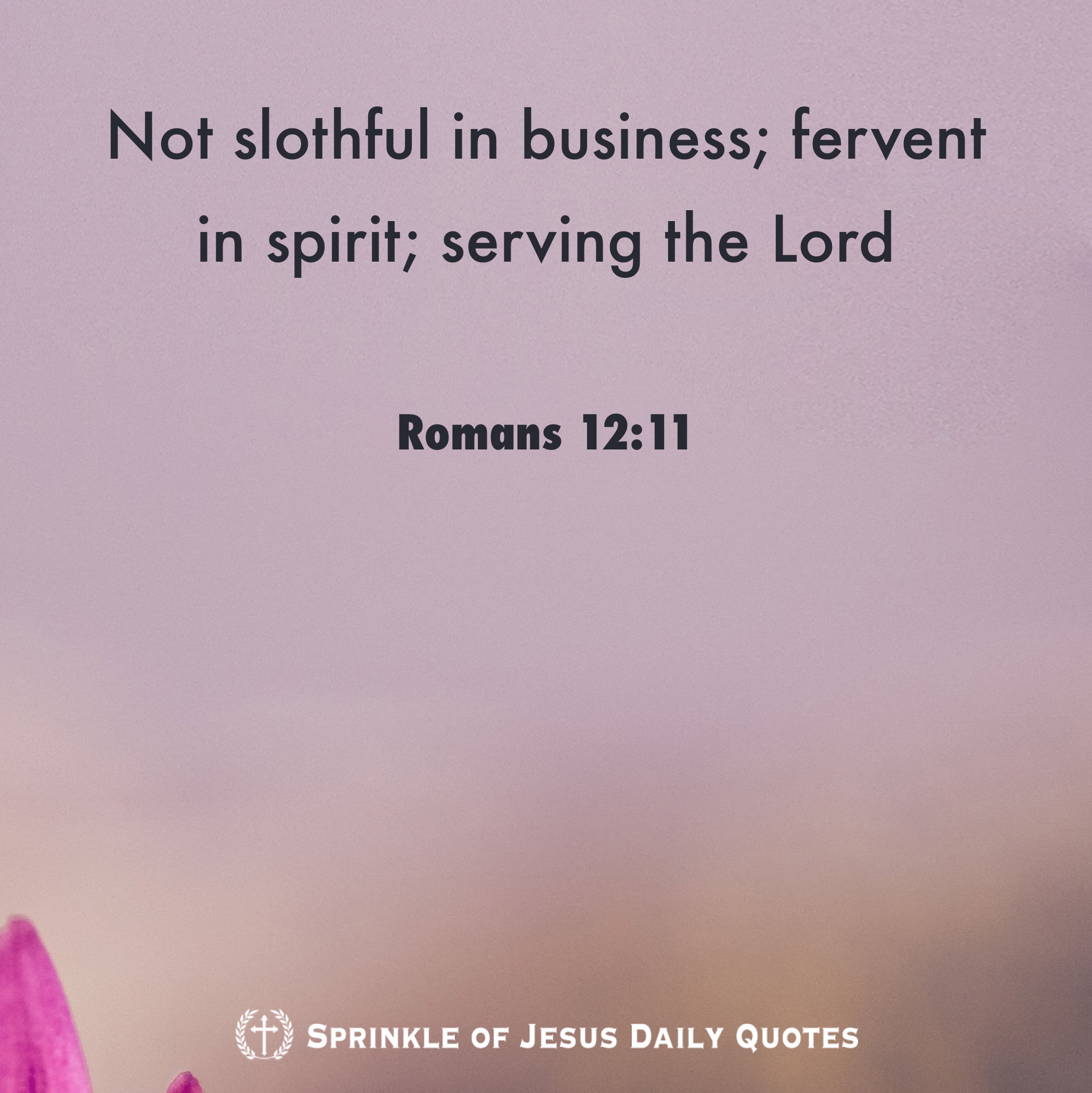

Yes, life changes, but you’ll never lose anyone or anything unless the Universe is prepared to replace it with something bigger and better.
From the Motivation app: https://motivation.app/download

I thank my God, making mention of thee always in my prayers, hearing of thy love and faith, which thou hast toward the Lord Jesus, and toward all saints

Where does faith in Jesus Christ come from? How does one come to truly love Jesus Christ and Christians?
As Paul writes with uncommon delicacy and diplomacy to his Christian brother Philemon, he is still careful to place the credit where it is due — entirely with God. It is God who is to be thanked, Paul clearly implies, even for Philemon’s love and faith in Christ.
While Paul does describe the love and faith as being Philemon’s own (“thy”), he is giving God the thanks for it (as he does in every other epistle). God is the author and finisher of true, Christ-centered faith. God is the spring from which all genuine love for Jesus and his people comes.
Paul’s careful and purposeful wording should affect us in two ways: first, it should remind us to give thanks for any Christian faith or love that we see around us, and especially that we see in our friends and loved ones. Without God, we could not enjoy that greatest and sweetest of bonds with them (nor they with us!).
Second, we must remember, then, to whom we should pray, and why, for love and faith. If God is the source of all true love and faith, then God is of course the one to whom we must go in order to pray for it.
When was the last time you thanked God for the grace of love and the mercy of faith in Jesus Christ? When did you last pray to him for more?

What does your ideal home look like?
Well, growing up I didn’t have much but I was thankful for what I did have. My home wasn’t fancy, but it was home. My dream home is a beautiful four story brick mansion. My home I live in now isn’t my dream home, but it is a place to live for now until my dream come true for my dream mansion. Since I was a little girl I always wanted to live in a very big house with lots of rooms, bathrooms, and everything else.
Sometimes I like to visit this neighborhood that has mansions as far as the eyes can see, they are so beautiful. One day I want to live in that neighborhood in my mansion with my children and grandchildren, and my husband. I cam see us sitting outside with the pit smoking meat and having fun. If I keep praying for it I know it will happen for me.
Every little girl has very big dreams. That’s my big dream, well one of them anyways. Until next time may your homes be as big as you can imagine them being. Bye for now.














 www.olivetree.com/votd/index.php








 Food for the Soul