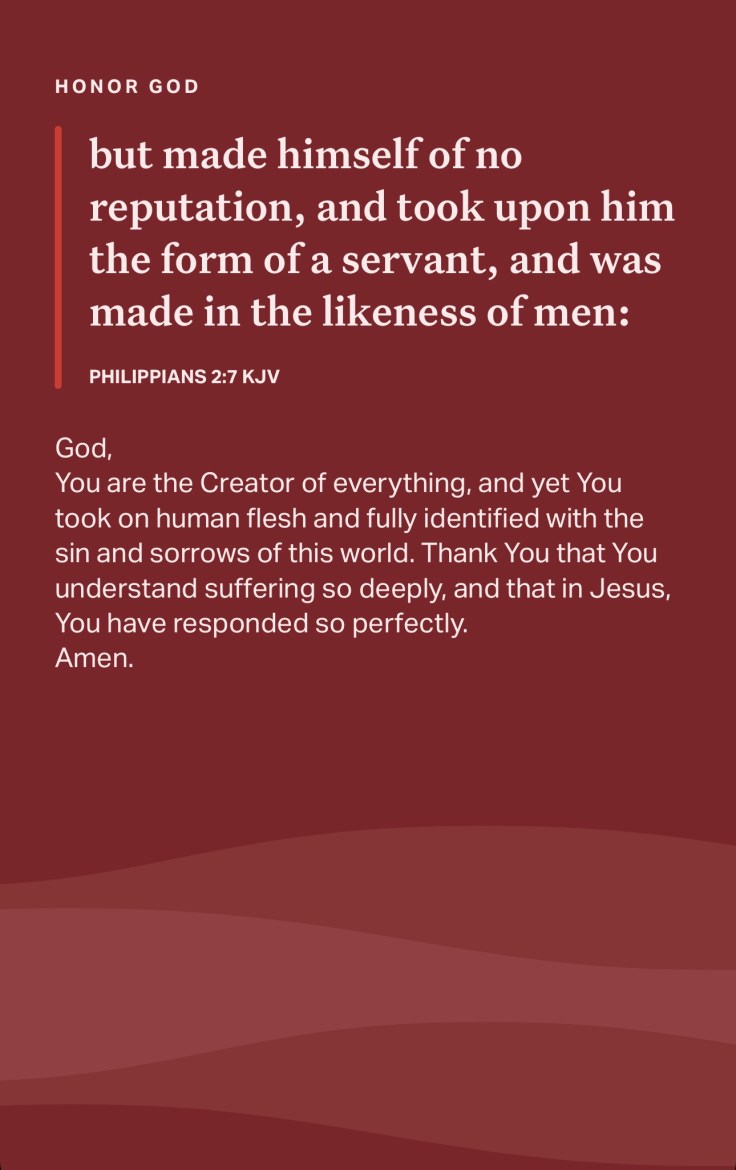
Honor God: Philippians 2:7

My site is for uplifting and encouraging those that need spiritual advice and guidance.

Click on the link above to read Matthew 5:4.
Good Grief
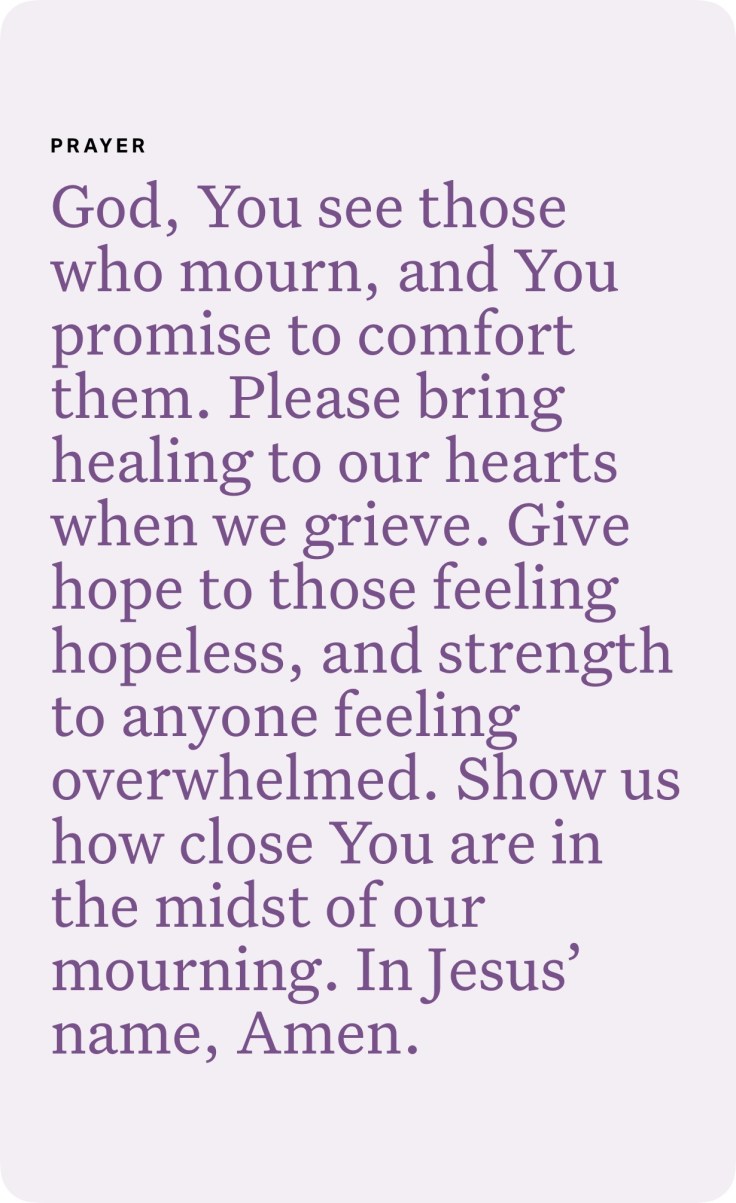
Can anything good come from grief? From mourning a deep loss? From weeping over a profoundly heavy heartache?
While grief is a necessary part of life, no one longs to grieve. But in the second beatitude—a series of promises Jesus made about God’s Kingdom—Jesus said this:
“Blessed are those who mourn, for they shall be comforted.”
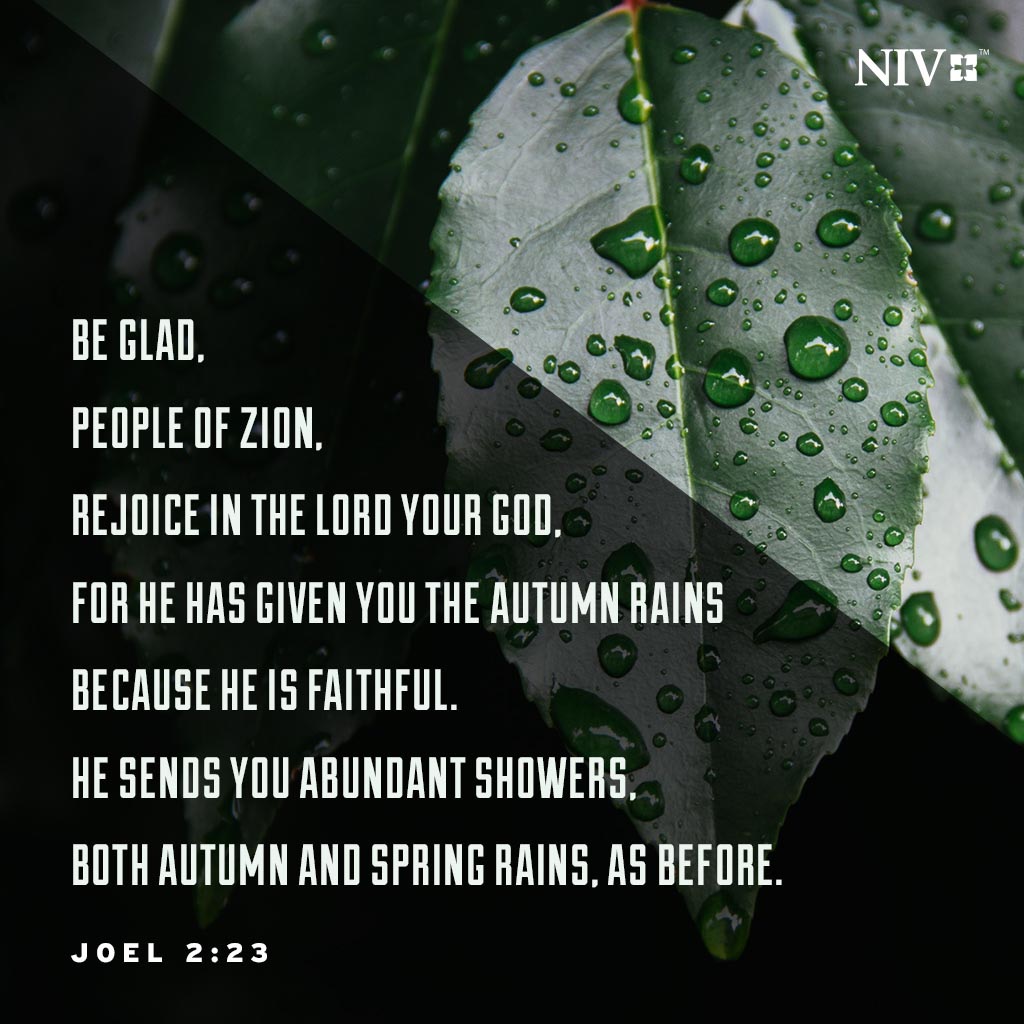
Matthew 5:4 ESVNo one can appreciate rain more than someone who’s lived in the desert. No one can value food more than someone who’s truly been starving. And no one can know God as their Comforter like someone who’s desperately needed comfort.
Unfortunately, death, decay, and disappointment are a part of this world. But even in our sorrow and suffering, God stands ready to comfort us—in unique and meaningful ways that only He can.
The Holy Spirit is often called the “Comforter,” as well as “Helper,” “Counselor,” or “Advocate.” But regardless of what He’s called, it’s always who He is. Even in our grief, He’s always a God who has our best in mind.
And so, how does God comfort us? He does this through His Spirit, through His Word, and by working in and through His people.
Do you have the eyes to see how He’s pursuing you? Have you opened your heart to His comfort?
If you are a follower of Christ who is mourning today, remember: Jesus Himself promised that you will be comforted. He’s always good, He’s always faithful, and He’s right here, ready to help.
Click on the link above to watch this video of the Daily Refresh. You can also download the YouVersion app to enjoy more of God’s Word. God bless you.

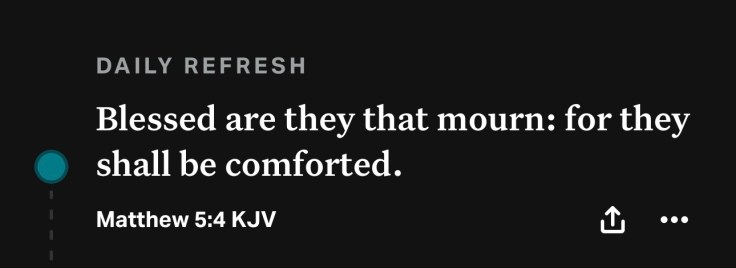
Blessed are they that mourn: for they shall be comforted. Matthew 5:4
We all grieve and mourn when we lose someone we love. The healing process takes a long time. We go through bouts of stress, depression, and anxiety. We even question God and ask Him why? Well that’s not a question that we should ask God because He doesn’t make any mistakes. We have to realize that death is a part of life, and we all have that bitter pill to swallow one day. Death came in the world because of sin, and life given eternal is through Jesus Christ.
Jesus comforts us when we are going through those moments of grief. He is always there to give us peace. We never go through anything alone. He said that He would never leave us nor forsake us. He said that He would be with us even until the end of the age. Until He returns, we must keep our faith strong. If you are grieving, call on Jesus. Pour out everything you are feeling inside. He will give you the strength you need to remain strong. If you don’t know Him as your Lord and Savior, call on Him and repent of your sins, He will gladly receive you with open arms. He will change your life forever.
He will give you a new life that you’ve never dreamed of. Just know that His love never fails. His love endures forever. When you feel like no one loves you, Jesus does. He laid down His life for us. He took all of our sins upon Himself so we could free, not separated from God, and so we can spend eternity with Him one day. It is your choice where you will spend eternity. It is your choice who you will follow. It is your choice because God gives us free will. The nails didn’t keep Him on the cross. Love is what kept Him on the cross. The love that the Father had, and still has for us is what kept Him on the cross. On the third day He rose with all power in His hands in heaven and on earth.
No one will ever love us like Jesus can, does, and always will. God is awesome! We serve a mighty God! Whoever calls upon the name of the LORD shall be saved! Praise God! Call on Him today. It will be the best decision you can and will ever make for your life, and for your eternal life. As always, this is said with love. Stay safe, stay blessed. Thank you for joining me on my journey with Food for the Soul.


The New King James Version is now available with Strong’s numbers!
Olive Tree’s Bible App makes Strong’s numbers easy and powerful. Tap on a word or Strong’s number in the text and open the related dictionary information in a new screen, split screen, or pop-up window, depending on your device and settings.
About Strong’s Numbers:
The well-known Strong’s Exhaustive Concordance lists all the significant words in the Bible and references each word to the original Hebrew and Greek languages. The concordance was first published in 1890 by Dr. James Strong, whose life’s work was to provide students of the Bible with an accurate and functional tool to understand the Bible’s original language. He and others worked on the list for 35 years without the aid of today’s technology. Dr. Strong’s work is still universally recognized as one of the essential aids for studying the Bible.
About the NKJV:
The New King James Version (NKJV) modernizes the expression of the King James Version published in 1611 by King James I of England (also known as the Authorized Version) while remaining true to the original Greek and Hebrew texts and keeping its literary mastery. Biblical scholars consulted a range of church leaders to keep communal worship, Christ-centered learning, and individual devotion in mind while accurately translating this version.
Upgrade Pricing Available! If you’ve previously purchased a qualifying item, like the NKJV, you can purchase this item for a special upgrade price. The upgrade price will be visible when you log in to your Olive Tree account and add the item to your cart (NOTE: Upgrade pricing is not available via in-app purchase).

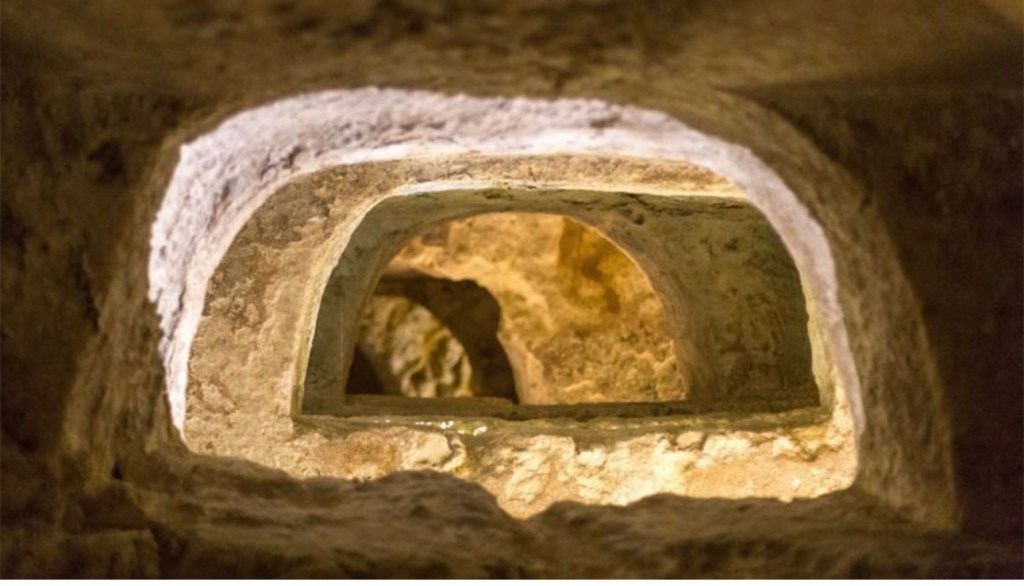
After the crucifixion of Jesus, the Gospels tell us Joseph of Arimathea buried him. Mark says, “Joseph bought some linen cloth, took down the body, wrapped it in the linen, and placed it in a tomb cut out of rock”(Mk. 15:46). While we direct most of our attention to the empty tomb, rightfully so, what became of the linen cloth Joseph wrapped Jesus in? Let’s see how this linen cloth, or shroud, became shrouded in controversy during the Middle Ages with the discovery of the Shroud of Turin.
We adapted this article from the NIV Cultural Backgrounds Study Bible. This resource helps you understand the culture, customs, and literature of the biblical times.
No artifact in the history of scholarship has been the subject of as much debate and study as the Shroud of Turin. This piece of linen cloth is said to bear the front and rear images of a man apparently crucified in Roman fashion. His injuries correspond to those suffered by Jesus, in that he appears to have had his hands (and possibly feet) pierced, as well as his side wounded. In addition, his legs were not broken. Proponents argue that this is the actual burial cloth of Christ, while opponents refer to it as a clever hoax.
Even the history of the shroud is mysterious. The basic details, as we know them, are as follows:
The Mandylion is said to have been discovered in 525 in Edessa, an early Christian city in eastern Turkey. It found its way to the Byzantine capital in AD 944. The shroud disappeared from Constantinople in 1204, when a crusader army looted the city. The leaders of the expedition were French, which could explain the shroud’s westward journey.
The shroud is a swath of linen cloth measuring 14 feet 3 inches (4.34 meters) by 3 feet 7 inches (1.09 meters). The figure on the cloth is naked, with hands folded across the pelvic area. He is bearded and between 5 feet 10 inches (1.78 meters) and 6 feet 1 inch (1.85 meters) in height. The cloth bears a number of extraordinary features.
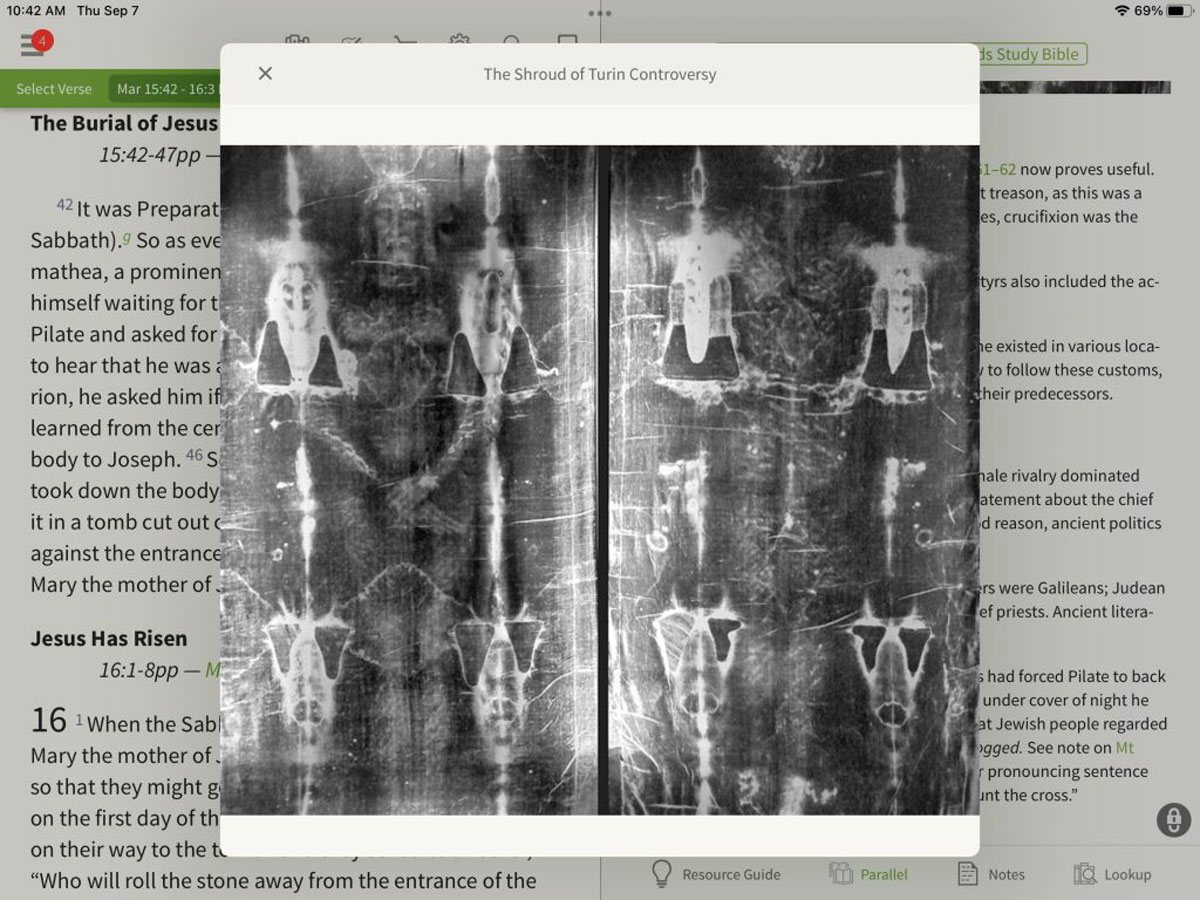
Supporters of the shroud’s authenticity argue that no individual in the Middle Ages could have had the expertise to deliberately create such a piece. In 1988, however, British scientists released the results of carbon 14 testing that dated the cloth to between 1260–1390. The shroud was judged to have been proven a fraud, yet subsequent researchers have argued that the sample for the carbon 14 test was taken from a part of the shroud that had been repaired and not from the original fabric.
In 2002 the shroud underwent substantial restoration, including the removal of the repair patches from 1532. Some researchers fear that this process will limit or invalidate any further testing. The enigma of the shroud continues. It remains either the most significant archaeological artifact ever found or one of the most ingenious forgeries in history.
Discover more fascinating details about the ancient world of Scripture by making this resource yours today!
Hey, join me at “La Brea S Books And” on the Spaces by Wix app to easily stay updated and more on the go.
Join with this link: http://wix.to/ktJCngS?ref=so. Got the app? Use the invite code: N6JQZO
You can join me here with this link to read all of my amazing articles, poetry, advice, and more info that’s going to be shared by me. Can’t wait to see you there.🍁
divasdelectabledeliciousdelightsanddrinks.wordpress.com/2023/09/18/eating-healthy-can-taste-good/
If you would like to read my article, click on the link above. Thanks for stopping by.


 bible.com/bible/1/mat.5.4.KJV




 www.olivetree.com/votd/index.php














 Food for the Soul