Day-7 Completed

My site is for uplifting and encouraging those that need spiritual advice and guidance.
Affliction Diminishes or Enlarges You
When a child learns to walk, he or she falls several times but gets up again until he or she succeeds. The child does not have a false identity. In contrast, when we grow up and fall, we usually stay on the floor.The apostle Paul showed a good attitude in the face of adversity. He was in prison, not for committing a crime, but for obeying his divine calling. He wrote a letter to the Philippians where he says, “Rejoice in the Lord always, and again I say rejoice!” In the midst of whatever situation you are going through, you can understand that we do not depend on circumstances but on a Spirit that has been given to us. We should be able to say, “In the midst of my condition, I rejoice in the Lord.”
Paul was talking about his experiences in life. His secret is in Philippians 4:11–13. He says that he may be going through a difficult situation or be in abundance, but he remains the same. People often change through the extremes they live in. One extreme is positive, which is living in abundance. The other extreme is when we lack or are in need. However, both extremes reveal who we are through our reactions. Paul says, “In Christ, I remain the same.” Nothing changes us, because we can do everything in Christ who is the reason of our strength.
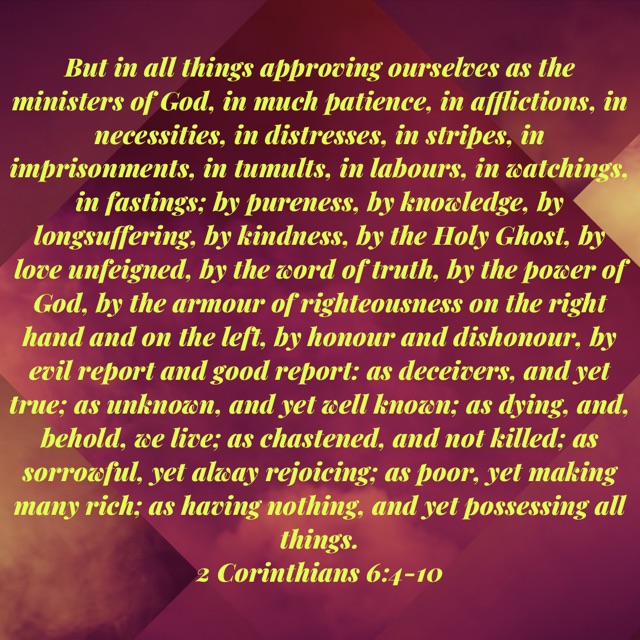
Paul proves to be a true apostle by demonstrating his resilience through his letters. He never presented his accomplishments, instead presented the facts. Through every hardship he experienced, he remained true to his calling. This is the greatest evidence of someone who possesses the life of the true God: that regardless of adversity, he or she continues to serve Him. Actions speak louder than words.
Paul said that he cared for and burdened for the church. It was the suffering of others that weighed him down, not his own condition. This process in his life not only produced in him knowledge of the God of all comfort but transformed him into an instrument of consolation for others. What he suffered made sense, because now he understood that his suffering and what had happened in his life was God’s preparation to enable him to comfort others
Identity
What happens in your life does not determine your spirit. How you perceive yourself and the abilities you have are important. When the nation of Israel lived in Egypt, they were a strong group of people who knew the true God, but they were slaves. They were not physically powerful, but they had the true God in their lives. The problem was that they had no identity. They did not know what they possessed.When you do not know what you have, even if you have natural skills and gifts, you will continue to act as if you did not have it. The Israelites suffered great affliction in the nation of Egypt. They could not break out of the situation; they saw it as too big and saw themselves as incapable. Anyone could have enslaved them because they were slaves in their minds. They had an attitude of defeat. Affliction had oppressed them and taken away their identity. This causes a person’s performance to decrease, which affects their ability to manifest the gifts they have been given.
In contrast, when your attitude is not determined by your problems, but by the identity that you have as a child of God, then what happens around you does not control you.
David was smaller, weaker, and less experienced than Saul’s soldiers. They had military training and weapons. But David had a different identity than they did. He perceived himself differently. David had enormous confidence in God. He lived in the old covenant, which means God was not perceived; it was difficult because people were dead in their spirit. Nevertheless, David had a characteristic in his life, which was his faith. He had believed the stories of the past when a prophet had told him that he would be king of Israel. He believed it. That produced in David an identity of destiny, of knowing he had a future, and knowing his relationship to God. Although he had less experience than the other soldiers, he was the only Israelite who believed that they could win; therefore, only he could have defeated the giant.
David saw himself as an overcomer. The reality is that his conception was based on truth. The others’ perception was based on a lie. Their problem was not physical, but mental and spiritual: they perceived themselves with an incorrect identity.
Merciful Father
In 2 Corinthians 1:3–5, the Bible says, “Praise be to the God and Father of our Lord Jesus Christ, the Father of compassion and the God of all comfort, who comforts us in all our troubles, so that we can comfort those in any trouble with the comfort we ourselves receive from God. For just as we share abundantly in the sufferings of Christ, so also our comfort abounds through Christ.”Paul teaches that in the midst of his afflictions the Father of mercy was revealed to him. When we talk about the Father, the earthly paternal image comes to mind. But no matter what your dad was like, you need to understand that God, the Father, has different facets to relate to us. In difficulty, He is the Father of mercy. He presents Himself in various ways, but in distress, we need to know Him as a merciful Father.
God also comforts us through our difficulties. I do not know what your problem is, but I do know about the God of comfort. The comfort you need is in the Father of all consolation and mercy. Paul learned that afflictions were part of life and he was no stranger to them, although they were never the product of his irresponsibility. There are situations in life where our suffering is due to the effect of what we do and our irresponsibility. In the case of Paul, the afflictions that he narrates were the result of obeying a call in his life. He was not in control of his circumstances and could not change them.
The afflictions of life are not necessarily the result of something you did. Sometimes there are parents distressed because the children rebel and people believe that it is due to bad parenting. However, children grow up and make their own decisions. If your situation is out of your control, God, the Father of comfort, will produce peace in your heart. If you were the cause of your circumstances, correct your wrongdoing, and in the midst of it all, you will know the Father of mercy.
God will not deliver you from all your situations, but He will always comfort you. We are not always freed immediately from the situation, but we do come out with our heads held high.
Peace In Christ
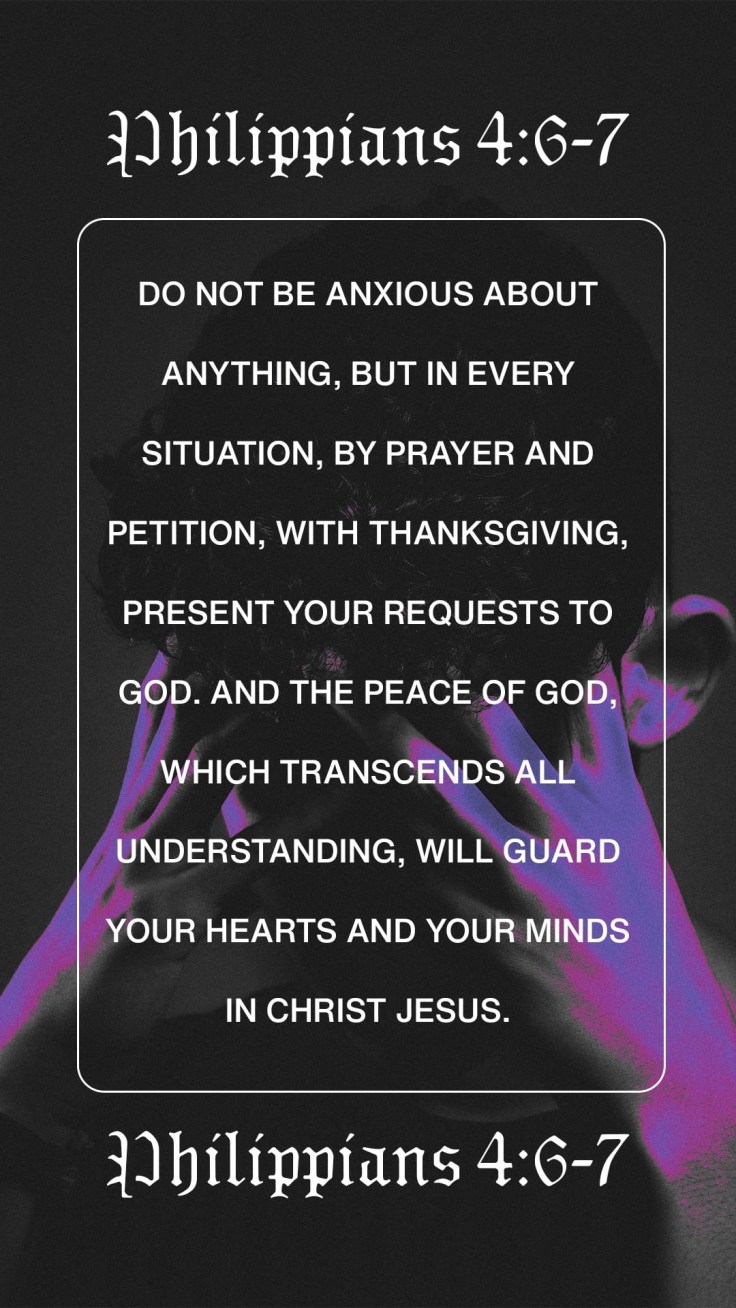
Philippians 4:7 says, “And the peace of God, which transcends all understanding, will guard your hearts and your minds in Christ Jesus.” It is not about only guarding your heart and emotions, but your body as well. When the body has afflictions, the heart may suffer attacks and the mind may suffer anxiety. As we get older, the heart becomes weaker to bear the burdens and difficulties of life.The peace of God is something that not only surpasses all understanding but exceeds our natural ways. This peace exceeds the natural and causes us to remain calm regardless of our circumstances. It guards the heart. We do not lose our minds and our hearts beat as it should. This peace keeps the mind and body healthy. The peace of God not only produces an effect on my soul but also causes something in my body. I am healthy in the midst of difficult circumstances.
The peace of God orients you and keeps you focused on Christ. It allows you to experience the reality of Christ because you could not bear the circumstances and live the same way if you did not have Christ in your life and lived submitted to the Spirit. The peace of God produces the effect of being centered on Christ and understanding that this is possible only through His work in us.
The result is peace in the midst of adversity. Problems may continue, and there may not be an exact day or time for how long your situation will be, but our life does not depend on knowing when the difficulties we are going through will end. Our life depends on God. Having the peace of God allows me to stay calm and safe in the midst of trouble.
Paul does not teach that, with Christ, problems will no longer be part of our life. He does not teach a gospel that is a good-luck charm, where everything will be perfect. It is not like that! Paul says that those who are with Christ can go through the same circumstances as any other person, but with the great difference that Christ, who is the peace of God, produces the effect of life in the Spirit. It is a different reality that surpasses all understanding.
Peace that Surpasses All Understanding
When we have the peace of God, our problems, whether big or small, do not cause anxiety. Choosing a life with worry, even if the problem is small, will lead you to distress. Worry causes your problem to only get bigger.Problems appear smaller with the peace of God in your mind and heart. You are unshaken. Your circumstances are not the center of your life. You keep on going, acting, and doing what you must do because in your life there is the peace of God.
God’s peace surpasses all understanding. It does not come from your skills. You do not produce it. It is not the result of something you can do by some natural exercise. It is not the product of something you learn at school and it does not come from friendships, although it is important to have healthy relationships through difficult times.
This peace is exercised through a life in the Spirit. It is the absolute confidence that your life is in the hands of God. It is resting in His faithfulness and not depending on your skills or strengths. It is not a logical peace, but one that surpasses logic. It means that a psychologist might go crazy analyzing you in your situation despite what they have learned. They might not understand how a person going through such circumstances could remain in peace.
God’s peace does not come from human beings; the natural mind does not understand it. Tranquility in difficulties only comes from something that God produces. The peace of God will stabilize your soul, and guard your heart, mind, and emotions. The problem is that our soul betrays us, since it reacts to the circumstances of life. Accustomed to governing, it tries to produce reactions of sadness, depression, fear, and everything that the natural mind, soul, heart, and emotions produce in the midst of affliction. However, those reactions take us to a state of anxiety which then confuses our heart and mind, making us chaotic. The peace of God guards our soul and protects us so our condition and circumstances do not govern us. There is a peace that goes beyond the understanding of psychology and of what human beings can do. What governs my life is in the Spirit.
Pray with Thanksgiving
The type of prayer that Paul writes about is not one of manipulation of people or God. We think that by manipulating God through prayer or asking Him to manipulate others, we will obtain things. But Philippians says that our prayers should be with thanksgiving.There are prayers that produce a spirit of disbelief and affliction. Instead of removing the worry in our lives, those prayers produce stress. They are prayers that try to manipulate God with self-concentration, wanting to psychologically manipulate Him. Do you believe we can manipulate God? God cannot be manipulated.
Those types of prayers do not produce anything good, nor are they the way to communicate with God. In reality, those are prayers of disbelief. Paul says that our prayers should be flavored with gratitude, for in this way they become prayers of faith.
Paul says that “the peace of God, which transcends all understanding, will guard our hearts and minds in Christ Jesus.” When we pray correctly to God in the midst of our situation of distress, this will produce peace. It is not a peace that comes from something external, but that only God can produce within you.
The answer is not that the problem is going to be solved. Paul is not saying that the problem will be solved immediately. He says that when you pray with thanksgiving, the peace of God will come and guard your heart and mind. The peace of God is produced through your prayer of faith in the midst of your circumstances.
Normally, we put our afflictions front and center; there are two ways we can await the results. On one side is your worry, that comes with fear for the outcome, and on the other side is the peace of God, that fills our hearts and minds. On neither side is the problem solved, but you can choose which way you will face the future. One is filled with anxiety: the problem is not solved, but your life will have the consequences of worry and fear, and the results they produce. On the other side, even though the problem does not go away, you have peace in your heart and mind. With the peace of God, you will be fine no matter what happens.
Affliction Is Part of Life
Philippians 4:6 says: “Do not be anxious about anything, but in every situation, by prayer and petition, with thanksgiving, present your requests to God.”In his teachings, Paul speaks about the human condition and what we go through in everyday life. This is important because although we do need to know the richness in the life of Christ, we should also know how to use it in adverse situations. In the book of Philippians, Paul teaches about the concerns we live through and the distress of the soul. We need to understand that afflictions are part of life. We cannot avoid them. Our life is not about living in these situations, but they are part of it.
 www.bible.com/en/reading-plans/25421
 bible.com/bible/1/2co.11.23-29.KJV
 bible.com/bible/1/php.4.11-13.KJV
 bible.com/bible/1/php.4.4.KJV
 www.bible.com/en/reading-plans/25421
 bible.com/bible/1/2co.6.4-10.KJV
 www.bible.com/en/reading-plans/25421
 bible.com/bible/1/2co.1.3-5.KJV
 www.bible.com/en/reading-plans/25421
 www.bible.com/en/reading-plans/25421
 bible.com/bible/1/php.4.7.KJV
 www.bible.com/en/reading-plans/25421
 bible.com/bible/1/php.4.6-7.KJV
 www.bible.com/en/reading-plans/25421
 bible.com/bible/1/jhn.16.33.KJV
 bible.com/bible/1/php.4.6.KJV
 www.bible.com/en/reading-plans/25421
 www.bible.com/en/reading-plans/34441
 Food for the Soul