I really enjoy these Prayers I discovered on Glorify. Have a look! https://share.glorify-app.com/fSNGK94Fupb
Whatever we go through, God is here to heal our hurting hearts. God bless.

My site is for uplifting and encouraging those that need spiritual advice and guidance.

I really enjoy these Prayers I discovered on Glorify. Have a look! https://share.glorify-app.com/fSNGK94Fupb
Whatever we go through, God is here to heal our hurting hearts. God bless.

I really enjoy these Declarations I discovered on Glorify. Have a look! https://share.glorify-app.com/DRWKI41Eupb
Should you click on the link above, it will take you to download the app . This is a wonderful app. I pray you will be blessed by the Word of God. There are so many things on this app to enjoy. I highly recommend it. I have not missed one day using it since I downloaded it. I just want to share this experience with you all. God bless, stay safe, and have a wonderful Jesus filled day.


The next day John seeth Jesus coming unto him, and saith, Behold the Lamb of God, which taketh away the sin of the world. John 1:29 KJV https://bible.com/bible/1/jhn.1.29.KJV


Ever wondered if there’s more to know about Jesus’ tomb? Then let archaeology experts teach you! This post is an excerpt from the Zondervan Handbook of Biblical Archaeology. ARE ALL TOMBS THE SAME? According to Jewish practice the body of the deceased was initially laid to rest in the tomb’s inner chamber. First-century tombs characteristically had a small forecourt that led to the interior features of the tomb, including an inner chamber with benches situated along the walls, often with arcosolia, arched recesses in the wall, a lower elevation pit (for standing inside the tomb), and tunnel-like niches called loculi (Latin) or kokhim (Hebrew). No two tombs are exactly alike; and though they share these common features, as Jerusalem archaeologist Shimon Gibson has noted, “individualism was pronounced”. This therefore means we have not found, and should not expect to find, a first-century tomb precisely matching the tomb of Jesus as described in the Gospel accounts. THE ROLLING STONES The body of the deceased was laid out on a stone bench. A heavy stone blocked the small entrance door and was sealed; this thwarted the unwanted entrance of animals and grave robbers. Matthew reports that a “big” (Greek megan) stone was rolled against (Greek proskulisas) the door of Jesus’ tomb. Later, Matthew recounts how an angel “rolled back” (Greek apekulisen) this sealing stone from the door (Matt 28:2; cf. Mark 16:3–4; Luke 24:2). However, the image of a rolling-stone tomb as Jesus’ tomb has been questioned due to archaeological study of Jerusalem necropoli. In the vicinity of Jerusalem there are 1,000 or more rock-cut tombs. Israeli archaeologist Amos Kloner, who has examined more than 900 such tombs, found only four tombs dating from the late Second Temple period (the time of Jesus) that were closed by a rolling stone: The tomb of the Queen Helena of Adiabene The family tomb of King Herod of Jerusalem One nearby Herod’s Family Tomb Another located in the upper Kidron Valley These had a carved out slotted groove to one side of the tomb’s entrance made to receive a disk-shaped stone. The family could roll the stone forward in the track to cover the entryway of the tomb or roll it back to open it, allowing for new burials. These rolling stones weighed tons and could not have been moved by a single person. DID JOSEPH ROLL THE STONE HIMSELF? Gibson supposes that the stone covering Jesus’ tomb must not have been so heavy, since he observes both Matthew (27:60) and Mark (15:46) state that Joseph of Arimethea rolled the stone by himself. However, it should not be assumed that these statements mean that Joseph acted alone in the rolling of the stone any more than in transporting Jesus’ body to the tomb and wrapping it in a linen shroud (all of which the text says he did). The natural understanding of this is that Joseph took responsibility for and oversaw these tasks; he did not do them personally but had them done. How many people does it take to roll a stone? The women on the third day after the burial who came to anoint Jesus’ body said to one another, “Who will roll away the stone from the entrance of the tomb?” (Mark 16:3). These three women, even working together, understood that they were unable to move the stone. Gibson also overlooks the clear statement in the next verse (Mark 16:4) that “the stone, which was very large, had been rolled away” (Greek megas sphodra). Even a passage in the apocryphal Gospel of Peter states that Pilate sent Petronius the Centurion with soldiers and they rolled there a great stone and laid it against the entrance to the sepulcher (8:31–33). ROUND OR SQUARE? The rare rolling-stone tombs were reserved for royal or wealthy families and not the type utilized by average Jewish families. Kloner calculates that approximately 98% of stones used to close tombs in Jesus’ day were square block stones. These were simple slabs shaped something like a bolt with one end designed to provide a close fit for the small opening forming the doorway of the tomb. The larger remainder of the stone had a flange so it would rest against the outside surface of the tomb. These stone “plugs” had the special name golal in Hebrew. Often a filling of pebbles or mortar would be added to prevent the entrance of small vermin and insects. Evidence for a Square Stone Therefore, since these are the more common form of sealing tombs and the disk-shaped blocking stones are rare, it would have been exceptional for Jesus’ tomb to be so sealed. This led archaeologist Amos Kloner, according to Megan Souter, to argue that the Gospel references to “rolling away” a stone from the entrance to a tomb was a misunderstanding of the normal method of sealing a tomb since square stones do not “roll.” This may be true of the average person in Judea and Jerusalem, but Joseph of Arimathea appears to be a wealthy and influential person in the New Testament. Evidence for a Round Stone However, Urban C. von Wahlde analyzed the use of the Greek verb kulio (“to roll”) in the Synpotic Gospels. He concluded that the compounds of kulio all have the idea of movement “toward” or “away from”. Therefore, in his opinion, the grammar does not fit the idea of moving a square-shaped stone, which would have properly been described as “moved” or “dislodged,” although Gibson contends the golal could also be “rolled” after a fashion. von Wahlde also notes that while the Synoptic Gospels describe the sealing of the tomb in this manner, the Gospel of John uses a different Greek verb from the root hairo, with the meaning that the stone had been “removed” or “taken up” (Greek ermenon) from the tomb (John 20:1). He argues that this description reflects “the Jewish burial practice much more accurately than any of the other gospels. He [John] has given us a detail none of the other gospels have.” He further argues that because Jesus’ tomb was a borrowed tomb for an ordinary Jewish family, the evidence is in favor of closure by a square stone. von Wahalde concludes: “It is not that these accounts are necessarily wrong. But they do give the wrong impression. It may very well be that people rolled the ‘cork-shaped’ stones away from the tomb. Once you see the size of a ‘stopper’ stone, it is easy to see that, however one gets the stone out of the doorway, chances are you are going to roll it the rest of the way.” BUT, WAS JOSEPH WEALTHY? Must we conclude that the information in the Gospels gives the “wrong impression?” The grammar of “rolling” (Greek kulio + pros “up to”; apo “away from”) is unambiguous in the Synoptics, and it is an assumption that Joseph of Arimathea was an ordinary man with an ordinary family tomb. The Gospels portray him as a “rich man” (Matt 27:57), a “prominent member” of the Sanhedrin (Mark 15:43), and a man with significant status to be granted a private audience with Pontius Pilate and then given special permission to bury the body of a condemned criminal (not a relation) whose high-profile case had been controversial (John 19:38). This may imply a privileged position, which reflects in the apocryphal Gospel of Peter (2:3) that Pilate was Joseph’s “friend.” This description of an elite in Jerusalem society argues for someone whose family tomb could have fit the category of a rolling-stone tomb. Additionally, the terminology for the tomb as “cut out of the rock” (Matt 27:60; Luke 22:53) is found in the Septuagint of Isaiah 22:16 with reference to a royal tomb. For the poorer lower class a cave was utilized for burial because a rock-cut tomb was too expensive. Joseph of Arimethea could afford the most expensive of tombs, the kind used by the upper class and nobility. Christian scholars through the centuries have seen this as a fulfillment of the prediction in Isaiah 53:9 of the Messiah’s death: “He was assigned a grave with the wicked, and with the rich, in his death,” noting also that as Jesus was a descendant of King David, he was royalty and therefore entitled to an appropriate burial. As to the exceptional grammar of John, commentators have long noticed this particular wording as indeed a detail added by John to the account but have drawn a different conclusion as to the purpose. MODEL OF ROLLING STONE FIRST-CENTURY TOMB A. Front Tomb Wall B. Rolling Stone C. Stopping Stone D. Slanted Track for Rolling Stone E. Entrance F. Niche G. Bench H. Pit I. Ossuary J. Body Placed on Bench for Burial Preparation ANGELS MOVED THE STONE One could argue that while the stone had been rolled over the opening, the manner in which it had been rolled away was what was exceptional. The use of the perfect middle/passive participle (“had been moved away”) could suggest that the stone had been “thrown” some distance from the tomb, indicating a divine agency. In all accounts angels are mentioned as entering the tomb, and therefore, must have been responsible for the stone’s removal. Matthew makes this very point: “There was a violent earthquake, for an angel of the Lord came down from heaven and, going to the tomb, rolled back the stone and sat on it” (Matt 28:2). Therefore, in this case, the stone may have been a rolling stone, but it was not technically “rolled away” as was the usual practice, but forcibly moved aside. This, then, was the detail of supernatural intervention witnessed by the women as one evidence of the resurrection that John wished to convey. While archaeology can provide examples of specific rolling-stone tombs from the period and argue for the more common closure of tombs with square stones, the deciding factor in the case of Jesus’ tomb must be the interpretation of the biblical text. The kind of tomb and sealing stone implied in the text fit the archaeological data described above. Keep Learning! If you liked the content above, get more like it with the Zondervan Handbook of Biblical Archaeology


Check out this incredible song by Eric Nordhoff I found on Glorify: https://share.glorify-app.com/jErd7jlctpb


Check out this incredible song by Joel Camey I found on Glorify: https://share.glorify-app.com/WiE8xQ3Erpb
Isaiah 40:31- But they that wait upon the LORD shall renew their strength; they shall mount up with wings as eagles; they shall run, and not be weary; and they shall walk, and not faint.
Blessed be the name of the LORD to the glory of God, the Creator of heaven and earth. May His Kingdom come, Amen.


Check out this incredible song by Stu G I found on Glorify: https://share.glorify-app.com/uQiGRAWDrpb

Click on the link above to listen to this beautiful meditation. God bless.

I really enjoy these Thought for the Day I discovered on Glorify. Have a look! https://share.glorify-app.com/HFHE0p2Crpb

Click on the link above to enjoy the thought for the day.


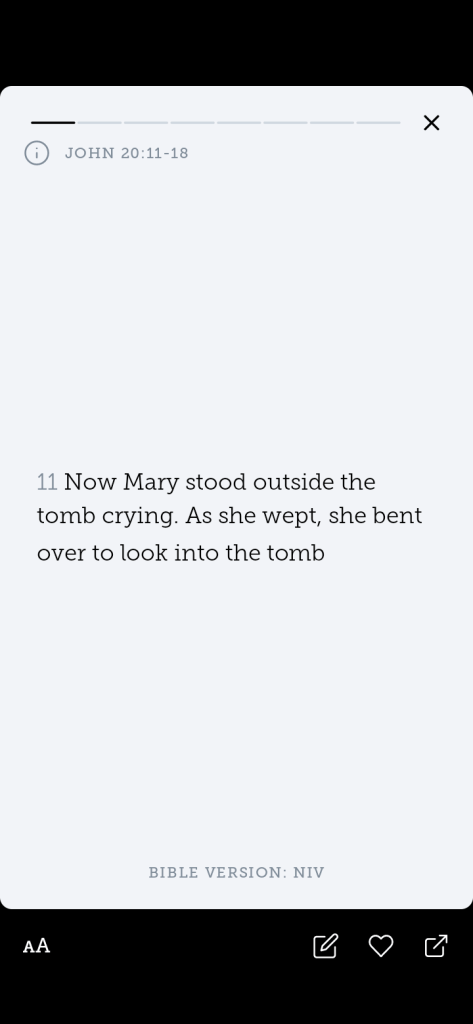

This Bible verse from Glorify really resonated with me: https://share.glorify-app.com/8UQyhY8Brpb


When it comes to taking care of business and the couple is together, and married, no one has the right to separate them . Husbands and wives have a God given right to stand and sit side by side. My husband and I could not sit nor stand side by side, believe me when I tell you this! I am very angry. Then when I voiced my thoughts about it I was told to watch my mouth. I told that man that no one was taking my freedom of speech and that I have every right to say what I want to say because it is wrong to separate a husband and wife. My husband tried to tell me to be quiet, but I told him that no body was going to take my freedom of speech away from me and that I would say whatever I want to say about it because it is wrong to separate us. I let the security guard know that I was going to write about this matter, so here it is. I also told him that I was posting it to Twitter and that is exactly what I did while we were there. My husband and I had to stand six feet from each other, and then he did not want the both of us to enter the building together. We had to tell him we were married, and yes we were coming in together. As I said, it is wrong to separate a husband and his wife. I told him that I could understand if we were not married, living together and shacking, or came by other means apart, but we are married and what he is doing is wrong. There were a lot of people who listened to what I had to say about the matter, and they were just as upset as I was. I am very angry right now! Marriage Vows Simply States: What God has joined together let no man separate, and that security guard at the Tyler, Texas Social Security Office separated us and didn’t care how we felt about it. Who in the world could be so cruel! I believe it is something he came up with on his own. I don’t know what to think about this! No one has ever told my husband and I that we could not sit or stand together for as long as we have been together! This is very wrong and the CDC needs to do something about this. After a while it is going to be like this everywhere. It would be a shame if this happens in restaurants and other places where business is taken care of.
Am I wrong for feeling the way that I do about this matter? Something had to be said! I am not afraid to speak about what I see and know is wrong. I have every right to speak my feelings when I know the way we were treated was wrong! People need to stop being afraid to speak on things that they see is wrong. No one, and I mean no one will take my freedom of speech away from me. I am an American born and raised and proud to say so, the days of brown skinned Americans being quiet is over, completely over! No one has the right to tell anyone what they can and cannot say, I don’t care who they are, what color they are, or where they are from! Things are not how they once were, and it was wrong then! If people do not speak up about the issues that matters to them they will be ran over and shut out as if they have no voice! This is why I let my voice be heard today in a public place where the issue mattered.
Don’t get me wrong, I am not a mean and hateful person, but when I am provoked as I was today I will fight back and I used my voice to do it. Hopefully others will to. United we stand and divided we fall. If we don’t stand for something, we will fall for anything. We must let our voices be heard.
What are your thoughts? How would you feel? Would you keep quiet about it, or would you speak about it? I want to know what you think and how you feel. Leave your thoughts in the comment section should you stop by Food for the Soul. Have a wonderful sunny day. ©2022

This is not a picture of me, but it states the expression of how I am feeling at this very minute.
Happy 125th Birthday to A.W. Tozer! This week we are celebrating his birthday by discounting some of his most beloved titles. Learn more about him below. Who was A.W. Tozer? A. W. Tozer (1897-1963) began his pursuit of God at the age of seventeen after hearing a street preacher in Akron, Ohio. A self-taught theologian, Tozer was a pastor, writer and editor whose powerful use of words continues to grip the intellect and stir the soul of today’s reader. Today his legacy continues as his words are still as relevant today as they were fifty years ago. New! Pursuit of God (Audio) This beloved classic by A.W. Tozer is for the spiritually dissatisfied, for the passionate, for the hungry. If you are content wading in the “shallows” while bearing no passion to glorify God and enjoy Him forever – then this book is not for you. If your hunger and thirst can only be satisfied by God Himself, and the desire for the piercing sweetness of the love of Christ overrides all competing desires, then listening to the Pursuit of God will intoxicate you. Chapters include discussions on the bliss of following hard after God, the sacrament of living, the blessedness of possessing nothing as well as the paradox of the simultaneous pursuit of God while being pursued by Him. Pursuit of God (Text) The Pursuit of God is the enduring Christian classic written by renowned pastor and theologian A.W. Tozer. More than 65 years later, the words Tozer penned on a train from Illinois to Texas echo across the decades to resonate with power in the heart of anyone longing for a deeper experience with God. This devotional masterpiece is at once thought-provoking and spirit-enlivening, an invitation to think deeply about your faith even as you come alive to God’s presence surrounding, sustaining and–yes–pursuing you. “This book is a modest attempt,” Tozer wrote, “to aid God’s children so to find Him.” If you are hungry, The Pursuit of God will lead you to the only One who can satisfy the soul. A.W. Tozer Study Bible “The Word of God well understood and religiously obeyed is the shortest route to spiritual perfection. Nothing less than a whole Bible can make a whole Christian.” —A. W. Tozer Key writings of one of the twentieth century’s most profound Christian authors are married with the scriptures that A. W. Tozer loved, studied and wrote about over the course of his forty-year ministry. Hendrickson Publishers is proud to introduce the A. W. Tozer Study Bible Notes, which will introduce a whole generation of readers to his work. Tozer, a pastor, preacher, student and teacher, is perhaps the closest American writer to C. S. Lewis, with the same penetrating insights and straightforward use of language. His bracing words unlock many of the mysteries of the Scriptures in language that could have been written today. More By A.W. Tozer Looking for more titles by A.W. Tozer? Click here


But he was wounded for our transgressions, he was bruised for our iniquities: the chastisement of our peace was upon him; and with his stripes we are healed. Isaiah 53:5 KJV https://bible.com/bible/1/isa.53.5.KJV


I finished the No Love, No Victory Bible reading plan from @YouVersion! Check it out here: http://bible.com/r/6tk




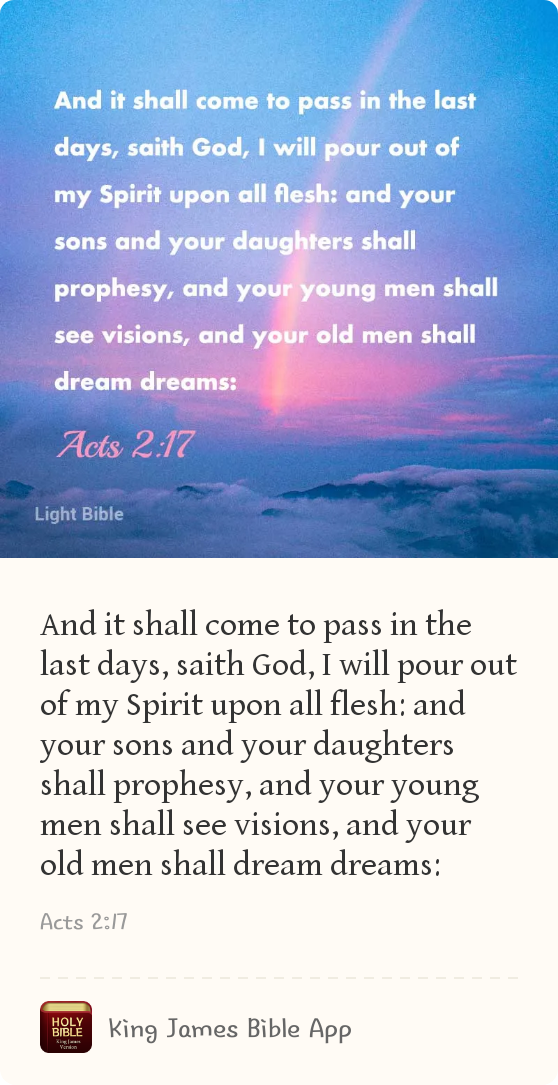


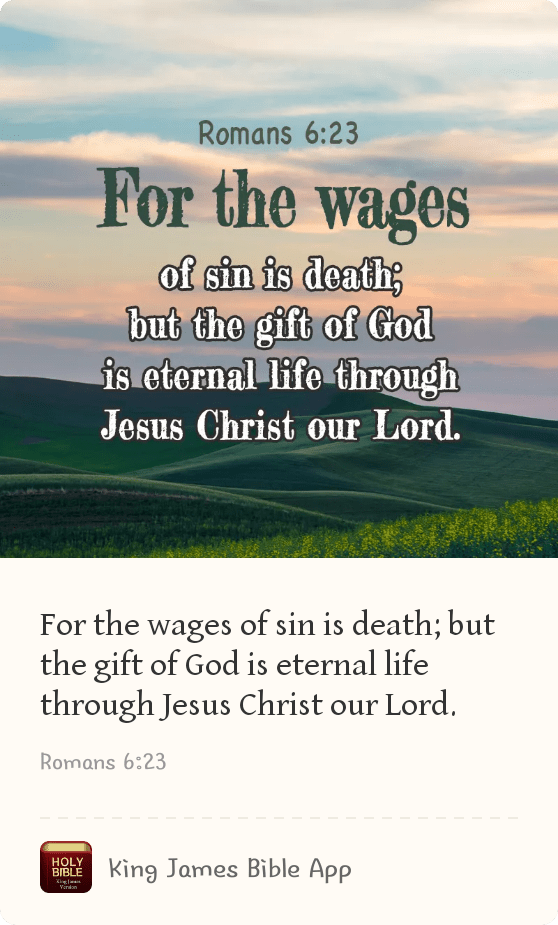






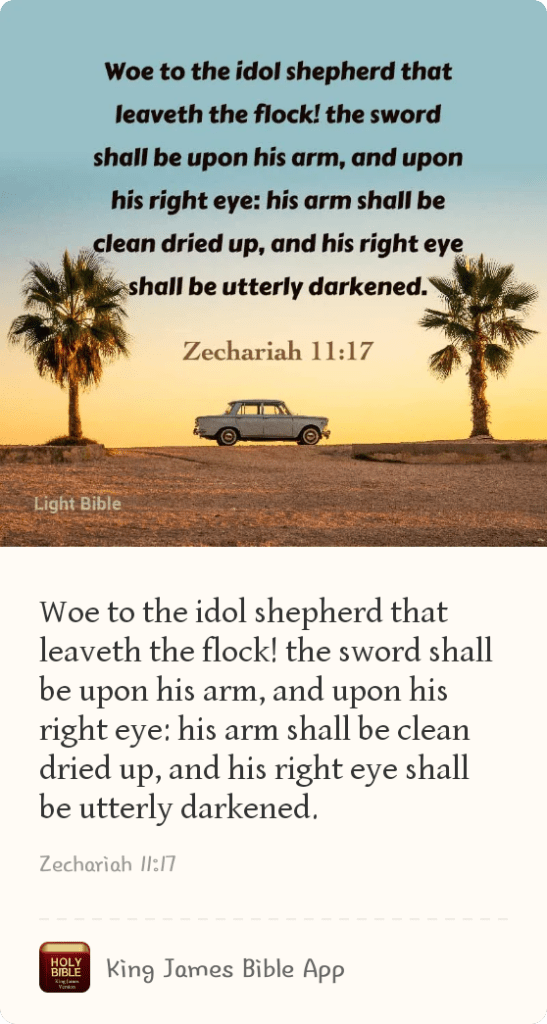
 Food for the Soul